Monday, July 13, 2009

Upcoming Trips

Below is a list of upcoming trips and events by local organizations for the weekend of July 18th - 19th, 2009:

New York City Audubon Society
City of Water Day Eco-Cruise
Saturday, July 18, 12-1:30pm
With Metropolitan Waterfront Alliance
Guide: Peter Mott
As part of City of Water Day, a celebration of the waterways and harbors of New York City, NYC Audubon is offering a special eco-cruise past Hoffman and Swinburne Islands exploring the natural history of the area. The tour leaves from Governor's Island. Visit www.gipec.com/Visit_the_Island for information and schedule.
Limited to 175.
Free

Butterfly Identification Workshop
Sunday, July 19, 10am-noon
Instructor: Don Riepe With NYC Butterfly Club
Meet at the Jamaica Bay Refuge Visitor Center for this program on finding, identifying and photographing butterflies, moths and other insects in NYC parks.
Limited to 25.
$10 ($9 for NYC Audubon members at the Senior/Student level and up)


Protectors of Pine Oak Woods
Saturday, July 18, 11:00 a.m. to 2:00 p.m.
North Mount Loretto Woods
This is a great new purchase by New York State DEC. Explore these beautiful woodlands' extensive American Beech, Oak and Sweet Gum forest with naturalist, photographer Sandra Mechanic.
Meet at the corner of Bartow and Richard Avenues off Hylan Blvd across from Mt. Loretto Unique Aea.
Bring bug spray, lunch and beverages.
For more information, phone Dick Buegler at 718-761-7496.

Sunday July 19, First Part, 10 a.m. to 12:00 noon
Corson Brook Woods Late Summer Flowering Walk
Meet at the intersection of Forest Hill Road and Jasper Street, near the rear entrance to College of S.I. Join naturalist, photographer Sandra Mechanic on an exciting walk searching for late blooming wildflowers where dozens of wildflower species were in bloom this spring. We will search for White Snakeroot, Black Cohosh, Spotted Wintergreen and the flowers or seed heads of the Wild Leek whose tasty leaves appeared for a week or two in early spring and "melted" away. We may also find the 1 to 3 inch bladders of the Bladdernut that bloomed in June that now rattle when shaken.
Bring bug spray, lunch and beverages.
For more information, phone Dick at 718-761-7496.

Sunday July 19, Second Part, 12:30 p.m. to 2:30 p.m.
The above walk will continue at Blood Root Valley
Park and Meet Sandra Mechanic at the back end of Wagner HS on Manor Road, near the JCC, where we can enjoy the deeply shaded cool mature forest with ancient Red Oaks, American Beech and Sweet Gum trees and in the brook bottom below, Black Walnut trees laden with edible walnuts along with dozens of Sugar Maples, a rare Staten Island forest.
Bring bug spray, lunch and beverages. The leaves of the spring blooming Bloodroot may still be showing.
For more information, phone Dick at 718-761-7496.

Sunday, July 19, 11 a.m. to 1 p.m.
Butterflies at Blue Heron Park
Staten Island is home to a gorgeous collection of butterflies. The variety of sizes and shapes, colors and styles is no better evidenced than at Blue Heron Park. Enjoy time with Cliff Hagen as he shares tips for identifying Staten Island's most brilliant insects.
Meet in the parking lot of Blue Heron Park on Poillon Ave. between Hylan Blvd. and Amboy Road.
Bring binoculars if you have them.
For more information phone Dick Buegler at 718-761-7496 or Cliff at 718-313-8591


Urban Park Rangers
Saturday, July 18, 2009

Early Morning Birding
8:00 a.m.
Join the Urban Park Rangers for this weekly Ranger-led birding walk of the Salt Marsh…
Location: Marine Park, Brooklyn
Cost: Free

Early Birding
9:00 a.m.
What birds will we see? Bring your comfortable shoes, some binoculars, and your curiosity…
Location: High Rock Park, Staten Island
Free

Canoeing the Lagoon
10:00 a.m.
Join the Urban Park Rangers on this easy adventure paddle through the sparkling blue waters…
Location: Pelham Bay Park, Bronx
Free

Backyard Birding
10:00 a.m.
Crotona Park is home to many species of birds. Join the Rangers as we help you to identify…
Location: Crotona Park, Bronx
Free

Canoeing
10:00 a.m.
Learn the basics of canoeing as you canoe with the Rangers on Little Neck Bay. First…
Location: Fort Totten Park, Queens
Free

John Muir Hike
11:00 a.m.
Stretch your legs and get some air as we traverse the park’s only east-west trail. …
Location: Van Cortlandt Park, Bronx
Free

Nature Hide and Seek
11:00 a.m.
Join the Rangers and discover how some animals hide or disguise themselves and why others…
Location: Prospect Park, Brooklyn
Free

Children’s Hour: Bottle Biology
1:00 p.m.
This month we will be creating soda bottle terrariums. Bring an empty, clean two-liter soda…
Location: Marine Park, Brooklyn
Free

Little Red Lighthouse
1:00 p.m.
View the famous Jeffrey’s Hook Lighthouse! Bring a camera because you won’t…
Location: Fort Washington Park, Manhattan
Free

Nature Bingo for Kids
2:00 p.m.
Learn about nature while playing a fun game. Prizes awarded to the winners. This activity…
Location: Van Cortlandt Park, Bronx
Free

Bird Eco-Crafts
2:00 p.m.
Bring the kids to the park for an afternoon of creating bird-themed crafts. Materials…
Location: Crotona Park, Bronx
Free

Family Camping
5:00 p.m. Enjoy a barbecue cookout and night hike too! Tents, dinner, and a light breakfast provided.…
Location: Alley Pond Park, Queens
Free

Exploring Twin Island
10:00 a.m.
From the rocky shore to the forest, this island has it all. See it for yourself!
Location: Pelham Bay Park, Bronx
Free

Nature Scavenger Hunt
11:00 a.m.
Assemble your team and challenge yourself to find nature’s treasures. How many can you find?
Location: Van Cortlandt Park, Bronx
Cost: Free

Living Lakes
1:00 a.m.
Join the Rangers for a lake ecology lesson and look for fresh water insects and other critters!
Location: Crotona Park, Bronx
Free

Tree-mendous Walk
11:00 a.m.
Join the Rangers for a leisurely stroll through the park and find out all about trees.
Location: Fort Greene Park, Brooklyn
Free

Canoe the Lullwater
11:00 a.m.
Enjoy creekside views of wading birds and basking turtles. First come, first-served. Ages 8+.
Location: Prospect Park, Brooklyn
Free

Canoe the Meer
11:00 a.m. & 2:00 p.m.
Join us for a fun-filled day of canoeing and water safety. Bring water, sunscreen, and a…
Location: Central Park, Manhattan
Free

Canoe the Lullwater
12:30 p.m.
Enjoy creekside views of wading birds and basking turtles. First come, first-served. Ages 8+.
Location: Prospect Park, Brooklyn
Free

Sunday, July 19, 2009

Nature Scavenger Hunt
2:00 p.m.
Assemble your team and challenge yourself to find nature’s treasures. How many can you find?
Location: Van Cortlandt Park, Bronx
Free

Living Lakes
2:00 p.m.
Join the Rangers for a lake ecology lesson and look for fresh water insects and other critters!
Location: Crotona Park, Bronx
Free

Botany: From Beach to Forest
2:00 p.m.
Learn about the diverse plants that live at the ocean’s edge and in the forests of…
Location: Pelham Bay Park, Bronx
Free

Canoe the Lullwater
2:00 p.m.
Enjoy creek side views of wading birds and basking turtles. First come, first-served. Ages 8+.
Location: Prospect Park, Brooklyn
Free

Go Fish
2:00 p.m.
Discover the different species of fish found in ponds around New York City, as we see what…
Location: Kissena Park, Queens
Free

Family Camping
6:00 p.m.
You’ll pitch a tent, build a campfire, and go on a night hike to meet the nocturnal…
Location: Van Cortlandt Park, Bronx
Free

Night Hike
8:00 p.m.
Come check out the parks nightlife, and don’t forget to bring a flashlight!
Location: Inwood Hill Park, Manhattan
Free
...Read more

Saturday, July 11, 2009

Kestrels in Prospect Park

On Friday evening I received a phone call from Bobby Horvath. He had several young American Kestrels that he had rescued in Brooklyn. The juvenile falcons were ready to be released and he asked if I wanted to meet him in Prospect Park for the event.

I was absolutely giddy when I hung up the telephone. Kestrels are my favorite raptor. They are colorful, vocal and, despite their tiny size, very feisty. These falcons may only be the size of a robin, but they act like they are ten times larger. I couldn't wait.

Bobby wouldn't be able to get to Brooklyn until early afternoon. I went into Prospect Park early to scope out the best location for the release. It was breezy, sunny and dry, perfect weather for a picnic. Families were streaming into the park and claiming spots on the Long Meadow, Nelly's Lawn and near the bandshell. I decided that the Nethermead Meadow would be the best choice for the release as there were less crowds. I also tracked down the Urban Park Rangers and told them where and when to meet us. On my way out of the park I ran into Judy, who was on her way to a bird walk lead by Michelle from the Nature Center. She would make sure the group headed over to the Nethermead for the event.

We met Bobby at the 5th Street parking lot and packed into his car with famiglia Horvath (Bobby, Cathy, Christopher and little Sadie) plus two animal carriers loaded with kestrels. Bobby doesn't know Prospect Park very well, so I would direct him to Center Drive and the Nethermead Meadow. I mentioned to him that I was surprised that the falcons were being so quiet. He assured me that would change the moment he reached into the first carrier.

At the Nethermead Meadow we met with four Urban Park Rangers and a small group of folks from the Audubon Nature Center. The first kestrel Bobby extracted from the carrier was a feisty female that he immediately handed to me! She proceeded to use her razor-sharp bill to try and remove small chunks of my hand. Fortunately, she didn't break the skin and she quickly settled down. The second falcon was a male, which he handed to Robin. On the count of three, we released the pair and they rapidly ascended to high perches at the edge of the meadow to survey their new surroundings.

videoIn all, there were six young kestrels released. Bobby shared the excitement of releasing these beautiful birds with the rangers and several onlookers. Some of the falcons immediately disappeared towards Quaker Ridge to the west and stayed nearby perched in the mature trees dotting the meadow. As the onlookers dispersed a group of us stayed behind to enjoy the weather and keep an eye out for the kestrels. videoAt one point Bobby spotted a Peregrine Falcon heading our way from the direction of the Brooklyn Botanic Garden. I remembered that there is a large antenna tower at the southern edge of the BBG that a pair of peregrines periodically perch on. They must have spotted the tiny kestrels as the first bird headed directly towards the treetops at the edge of the Nethermead. A few minutes later a second one swooped in to check out the activity at the meadow. Thankfully, the kestrels were not discovered by the much larger raptors.

Thanks again, Bobby, for the great experience and watching over our city's wildlife.

Here's a slideshow from yesterday:

...Read more

Kestrel Release

Check back tomorrow morning to see my pics and a video about this afternoon's American Kestrel releases in Prospect Park with Bobby Horvath. "Klee, Klee, Klee, Klee, Klee, Klee!"

Weekly Species Highlights

Sorry for the lack of posts. I was out of town for a week. Here are the weekly species highlights for the second week of July:

Bird: Black Skimmer (Rynchops niger) - A tern-like seabird, the Black Skimmer breeds in North and South America. They is primarily found in bays, estuaries, lagoons, mudflats, beaches, shell banks, spoil islands, and coastal marshes. Chicks are semiprecocial and leave the nest as soon as they hatch. They lie inconspicuously in a nest depression where they are shaded from the sun by their parents. On adults, the basal half of the bill is red, the rest mainly black, and the lower mandible is much longer than the upper mandible. On young birds the mandibles are of equal length, but they rapidly become unequal during fledging.

Skimmers have a light graceful flight, with steady beats of their long wings and usually feed in large flocks. They fly low over the water surface with the lower mandible skimming the water for small fish, insects, crustaceans and mollusks.

Black skimmers are seen as far north as New York and in the south along the coast of the Gulf of Mexico. They occurs along the west coast of North America, from California through Mexico. In South America, they occur virtually throughout the continent. They are a social species forming colonies that consist of flocks containing both young and old birds. Colony size can vary between a small number of pairs to several thousand pairs.

Butterfly: Silver-spotted Skipper (Epargyreus clarus) - The Silver-spotted Skipper is one of our most common and familiar butterflies. The spot on their wing for which they are named, however, is white, not silver. They frequents roadsides, fields, and backyard gardens throughout North America. The name "skipper" refers to their habit of dashing quickly from flower to flower, as if they are skipping around a meadow. It is the largest skipper in North America where they can be found in open parks, fields, gardens, and meadows, and where larval food plants are available.

The yellow-greenish striped caterpillar with a large head and two orange eye-spots eat foliage of leguminous plants, including locust trees, wisteria, alfalfa, and stick-tights. Black locust is the favorite host plant.

Dragonfly: Eastern Amberwing (Perithemis tenera) - Feeding mainly on tiny flying insects, the amberwing is primarily a summer species but are active all year in the far southern U.S. It is the only tiny dragonfly with amber wings on the male. They can be found in many habitats from streams to lakes to ponds and marshes. It is one of the smallest dragons in North America and it is sometimes called a "wasp mimic" since it can look very wasp-like in flight.

Amphibian: Northern Diamond-backed Terrapin (Malaclemys terrapin) - This turtle was recently in the news in New York City as a group of 78 individuals caused the closing of one of JFK airport's runway. The diamondback terrapin is the only turtle in North America that lives entirely in brackish water. Diamondback terrapins can be found from southern New England to the Gulf of Mexico. In New York they can mostly be found on Long Island. They are a moderate-sized estuarine turtle reaching a maximum length of about 9 inches.

It is sometimes seen in the Atlantic Ocean, but are mainly found in coastal rivers as far as tidal influence. It inhabits brackish water, saltwater estuaries and tidal marshes. They feed mainly on estuarine mollusks, crustaceans and worms. They breed and lays eggs in the spring and summer. Nests are usually constructed in sand, but may also be in fill dirt. These turtles usually overwinter in the mud in channels and tidal flats.

The word terrapin is derived from an Algonquin word meaning "edible turtles that live in brackish water." In the late 19th century many populations were decimated for the food industry.

Diamondback terrapins can have a life expectancy of about 40 years.

Wildflower: Jewelweed (Impatiens capensis) - The ripe seedpods of Jewelweed or "touch-me-not" pop open at a gentle touch. Water drops bead up on the leaves, and a leaf held underwater has a silver sheen. They are a native North American native summer annual that can grow to 2-5' tall. The blooming period is mid-summer to early fall, and lasts about 2 months. Preferring light shade to partial sun, wet to moist conditions, this plant often forms large colonies by reseeding itself.

The flowers attract hummingbirds and long-tongued bees, including bumblebees and honeybees. The caterpillars of several moths feed on the foliage, including Obtuse Euchlaena, Pink-Legged Tiger Moth, White-Striped Black, and Toothed Brown Carpet. White-Tailed Deer browse on the foliage, while the White-Footed Mouse eats the seeds.

The Jewelweed's sap is supposed to be a cure for Poison Ivy and Stinging Nettle rashes. This sap also has fungicidal properties and has been used to treat Athlete's Foot.
...Read more

Wednesday, July 01, 2009

Hawk Triplets Update

I made a late afternoon run up to Prospect Park to look for Nelly and Max's triplets.

I pedaled across the Long Meadow and headed towards the hawk nest. At the north-west corner of Nelly's Lawn, below the massive Tuliptree, two Urban Park Rangers were staring up in the direction of the hawk's favorite perch. I hopped off my bike and asked if they were looking at all three of the fledglings in the tree. They weren't sure if both of the birds they were watching were juveniles. They weren't. Nelly was perched at the end of a large, broken off branch. A few feet to her left was one of the young red-tails. Her offspring was reclining on the branch in an odd, horizontal position. Her relaxed posture reminded me more of a Common Nighthawk than a true hawk. I scanned the Tuliptree from various positions trying to find the other two fledglings within the dense foliage. I could not find them. There were several robins making distress calls across the road in the woods of Sullivan Hill, so, after circling Nelly's Lawn and calling for the young hawks at the "Aralia Grove", I headed across the road.

Behind Sullivan Hill there is a natural depression that lies between the footpath and East Park Drive. Overshadowed by a few mature oaks, the understory is dense with various shrubs, Goutweed, knotweed and other wildflowers and grasses. It is a favorite hunting spot for the local hawks. I wasn't surprised to find several robins calling non-stop. It took me a few minutes of searching to finally locate one of the fledgling hawks. He was perched fairly low in the trees, sitting motionless in the late-day, dappled sunlight. I was taking some photos when, out of the corner of my eye, I spotted one of his nest mates to my right. The first hawk was quiet and patient. The second hawk must have been very hungry as he called frequently and flew short distances from tree to tree. I walked to the road to take his photo, but he squealed and flew directly to the Tuliptree.

Both adult Red-tailed Hawks had just circled above Nelly's Lawn prompting two of their three offspring to fly to the favorite perch, hoping for a handout. They didn't get one, at least, not right away.

videoA group of family and friends had gathered at Nelly's Lawn for a picnic. They had set up their blankets directly below the hawk perch in the Tuliptree. Between the two juvenile hawks calling for food and the children squealing at play it was difficult to tell the two species sounds apart. When Nelly arrived at the perch with a freshly killed young oriole, the squealing only got louder ... both by the hawks and the group of children who wanted to run after the hawks who just took off towards the Vale of Cashmere, fighting over the free meal. Both hawks ended up circling back to the Tuliptree where the meal was not shared. One could merely watch as his sibling devoured the small bird.

One non-hawk related observation was of a Ring-necked Duck. This bird species should have left the NYC area months ago, heading to their northern breeding grounds. For some unknown reason (or reasons) a single individual has remained in Prospect Park on the Upper Pool.
...Read more

Visit to Green-Wood Hawks

A quick search of Green-Wood Cemetery turned up the two young Red-tailed Hawks hanging around near Ocean Hill.

Marge had driven around looking in the usual spots a couple of days earlier, but wasn't able to find the two fledgling Red-tailed Hawks. I had a couple of hours the other day and the two of us went in search of the young raptors.

The goslings at Sylvan Water are now indistinguishable from the adult Canada Geese. Red-eyed Vireo can be heard calling from just about any wooded area in the cemetery. Barn Swallows and Chimney Swifts can be seen skimming the surface of the ponds to drink and cool off. I found a bee hive living in an old, iron Victorian fence post at the Dell Water. Not sure if they are European Honey Bees, but they are the most common species.

We ran into Tommy, one of the security guards, and he told us that the two young hawks were hanging around near the base of Ocean Hill. The hill is part of the high ridge formation that runs through Green-Wood Cemetery and Prospect Park. It only took a couple of seconds to locate one of the hawks as she flew towards the top of the ridge. A few minutes later we found her sibling.

The two birds looked strong and healthy, although they still haven't completely mastered the art of hunting and cried frequently for their parents to bring food. As they flew from pine tree to pine tree, I realized that they also haven't attempted any soaring or high flying. When one of the adult hawks flew overhead, they merely called and made feeble attempts to follow. At one point, the smaller of the two red-tails began stalking, then attacking, a branch that was lying at the base of a pine tree. I've seen this behavior frequently in the past and assume that this form of play is critical hunt training. He grabbed the piece of rotted wood and flew low across the road, perching on a horizontal monument. A car drove slowly passed the large raptor, but the driver didn't seem to notice the two foot tall bird just below the driver-side window.

videoIt was interesting to see how the two young hawks are still spending a lot of time together. I think that these local birds will spend nearly a year associating with each other. Perhaps they don't begin to spread out until they feel the urge to establish their own territory, find a mate, then begin the breeding cycle somewhere else in NYC.
...Read more

Other Nestlings

Last weekend I did some exploring around Prospect Park and observed several other birds preparing to leave their nests.

For the last few years, a pair of Barn Swallows have nested above one of the doorways at the park's nature center. I don't know if it is the same pair each year, but it certainly is a prime location for a swallow. The building is just a few yards from the water, there are many spots for collecting mud for nest building and insects are abundant. The adult swallows seemed wary of my presence below the nest and periodically flew back and forth in front of the narrow ledge that holds their nursery. Each time they passed the nest three heads would instinctively pop up with opened mouths.

A short walk from the nature center, near the start of the Lullwater, was a House Wren nest. The birds had built their nest within a small cavity in a dead tree, the opening of which was only about 7 feet above the ground. The woods surrounding the nest were noisy with the chattering of the adults trying to round-up their brood. One nestling remained in the nest. Each time I attempted to take a photograph of the tiny bird in the hole, he would duck his head back down. Eventually, I was lucky enough to snap one photo, but have about a dozen shots of the empty cavity. There seemed to be about 5 young wrens flitting about in the small forested area along the Lullwater. While I was still watching the nest, the final nestling became a fledgling. The stubby-tailed bird with a still yellow gape bolted from the nest and took off in search of his parents and siblings.

Not far from the House Wren nest, and perched close to the tops of the trees, was a Green Heron nest. These tiny herons are annual breeders in Prospect Park. It has been a few years since I've observed any in the park, so I was very excited to see these goofy-looking youngsters. I had also discovered a pair working on a nest in the Peninsula woods recently. It seems late in the season to be just getting started. Maybe it is their second attempt. The nest in the Lullwater has three occupants. The trio of Green Herons looked very mature, but still had a bit of spiky, white down adorning their heads. Their are nearly the size of the parents and one was already climbing the branches way above the nest. They should probably be fledged by the weekend.
...Read more

Monday, June 29, 2009

Upcoming Local Trips

Below is a list of upcoming local field trips for the weekend of July 4-5, 2009:

Protectors of Pine Oak Woods
Sunday, July 5, 9 a.m. to 11 a.m.
Corson's Brook Woods
Enjoy a morning walk in a rich woodland. We will be looking at and identifying various trees and shrubs. Of special interest will be the rare Bladdernut Hickory, Black Walnut trees and ferns.
Bring water and bug repellant, and wear sturdy shoes.
Meet at the corner of Jasper St. and Forest Hill Road.
Call Cathy Zelonis for more information 917-596-4198.

Sunday, July 5, 12 noon to 2 p.m.
Page Avenue Beach and Woods
Depending on the weather, we may walk the beachfront and/or through the woodlands. In addition to examining evidence of the recent and long term history of the area, we’ll study the geology of the beach as well as the flotsam and jetsam accumulated at the high tide lines to see what nature's debris has to tell us. It may be muddy so dress appropriately. Pick up shells and beach pebbles.
Meet at the parking lot at the end of Page Avenue on the left. Find the strange green branched young tree at the side of the parking lot.
For more information phone Dick Buegler 718-761-7496 or Clay Wollney at 718-869-6327.


Urban Park Rangers
Saturday, Jul 04, 2009
Birding Club
9:00 a.m.
Multiple Parks Locations

Fish Printing
11:00 a.m.
Multiple Parks Locations

Sunday, Jul 05, 2009
Nature Photography Series: Back to Basics
10:00 a.m.
Multiple Parks Locations

Basic Canoeing
11:00 a.m.
Multiple Parks Locations

Into the Depths
11:00 a.m.
Multiple Parks Locations

Summer Catch
11:00 a.m. - 2:00 p.m.
Multiple Parks Locations

Basic Canoeing
2:00 p.m.
Multiple Parks Locations

Into the Depths
2:00 p.m.
Multiple Parks Locations
...Read more

Friday, June 26, 2009

Unisphere Hawks in the News

The New York Daily News just picked up on the story of the Red-tailed Hawk fledglings in Flushing Meadow Park.

In Queens, hawk chicks take flight from Unisphere and land hard
By Lisa L. Colangelo


Bobby Horvath is a licensed wildlife rehabilitator and also a city firefighter.

It's tough being a young bird in the city - especially when you're learning to fly.

But when your nest is tucked inside the Unisphere instead of a tall tree, there are no soft landings.

That was the problem for two baby red-tailed hawks taking their first tentative steps outside the nest last month.

One of them plummeted to the concrete below the Unisphere. A kindhearted person rescued the fuzzy lump of a chick, and it went into the care of Bobby Horvath, a licensed wildlife rehabilitator who is also a city firefighter.

Read the entire article here.

As a side note, whenever the media spotlights Bobby and the great work he and his assistants do, they should also point out that he receives no state or federal grants. His organization works strictly on private donations. A little publicity would make his job a bit easier. Perhaps, in between putting out fires, saving wildlife and taking care of his family Bobby could send me a short note with information where people can send any donations. ...Read more

Weekly Species Highlights

Sorry I missed last weeks additions, but here are the weekly species highlights for the last week of June:

Bird: Green Heron (Butorides virescens) -
The Green Heron breeds along most of the eastern United States from the Canadian border south to the Gulf of Mexico and west to the Great Plains, western Texas and southwestern New Mexico. On the Pacific coast, it breeds from British Columbia south to California and Arizona. It winters in coastal California, southern Arizona and Texas, along the Gulf coast and along the Atlantic coast north to South Carolina. Most populations in North America are migratory. Green herons live along forested water margins and frequent both salt and fresh water. Green Herons are one of the few tool-using birds. They use a variety of baits and lures, such as crusts of bread, mayflies, and feathers. They then put the bait on the water surface and wait for prey to attack the bait. They stand motionless near the bait until a small fish or other animal approaches and then grab the prey. They eat primarily small fish, but it also crustaceans, mollusks, insects, reptiles and amphibians. They can be found in nearly all of NYC's parks.

Butterfly: Question Mark (Polygonia interrogationis) - This member of the brushfoot family has a small silvery crescent on the underside of its hind wings, as does the very similar Eastern Comma. However, beneath the crescent is a dot, making it resemble a question mark. They range from Southern Canada and all of the eastern United States except peninsular Florida, west to the eastern edge of the Rocky Mountains, south to southern Arizona and Mexico. Question Marks can be found in wooded areas with some open space, city parks, suburbs and fencerows. Overwintered adults fly and lay eggs in the spring until the end of May. Adults feed on rotting fruit, tree sap, dung, carrion. When these sources are unavailable Question Marks visit flowers such as common milkweed, aster, and sweet pepperbush. The caterpillar host plants include members of the elm family, Ulmus; hackberry, Celtis; and members of the nettle family including false nettle, Boehmeria; hop, Humulus; nettle, Urtica

Wildflower: Day Lily (Hemerocallis fulva) - It seems like every time I find a plant that I enjoy, it turns out to be one of the "bad" ones. The ubiquitous Day Lily appears to be another one of those disappointments. Native to Europe and Asia, it has been labeled an invasive species in North America. Named for the characteristic of each flower only blooming for about a day, it can be found along roadsides, stream banks, edges of woods, pastures, abandoned farm sites and urban centers. "Hemerocallis" is from the Greek words meaning "beautiful" and "day".

Tree: Little Leaf Linden (Tilia cordata) - This tree is native to Europe and western Asia, north to southern Great Britain, central Scandinavia, east to central Russia, and south to central Spain, Italy, Bulgaria and the Caucasus; in the south of its range it is restricted to high altitudes. The small yellow-green flower
clusters that bloom in early summer have a rich, heavy fragrance. The tree is a favorite of bees. A valuable monofloral honey is produced by bees using these trees. It is widely planted in North America as a substitute for the native Basswood or American Linden (Tilia Americana) which has a larger leaf. The white, finely-grained wood is a classic choice for refined woodcarvings.


...Read more

Thursday, June 25, 2009

Marine Park Rails

I received an email on Monday from Ron Bourque. That morning, he and his wife, Jean, had been at the Marine Park Salt Marsh Nature Center surveying Clapper Rails. At one point, while playing back a Clapper Rail recording, they were shocked to hear a Sora respond. Sora vocalizations are unique and don't sound anything like a Clapper Rail. They are small, skulking marsh birds that are more often heard than seen. I don't believe that they breed in NYC, but are seen, most often during the migration. I rode my bike to the saltmarsh the next morning, hoping to track down the bird.

I brought along some portable speakers and rail recordings, optimistic that I'd play a Sora call and one would step out of the marsh grass and march right up to me ... not. Hey, you never know.

I spent a long time walking to various vantage points along the trail that parallels the east side of the marsh, stopping to play the calls, then listening and scanning the grass. There wasn't any response to the recorded Sora whinnying, but whenever I played Clapper Rail vocalization, a chorus of "kek, kek, kek, kek, kek" joined in immediately. I was surprised at how many of these shy birds were hidden within the spartina grass.

videoI had looped around the trail several times and decided that if a Sora was present, he had no intention of revealing his location. I had been standing at a small overlook located about midway along the main trail, putting my gear away. As I turned to walk back to the gravel footpath I noticed something moving to my right. It was a Clapper Rail and the bird was walking back and forth in front of me like a common barnyard chicken. This normally shy bird spends most of its time hidden from view, not stalking birdwatchers. But here was one individual walking around in front of me for a good 2 minutes! Maybe he perceived me as a giant Clapper Rail and was trying to intimidate me into moving out of his territory. Maybe he was out for his daily stroll on dry ground. Whatever the reason for his behavior, I was taken completely by surprise and it made up for not finding a Sora, well, sort of.
...Read more

Botanic Garden Hawks Fledge

Carol at the New York Botanic Garden just reported to me that their two young Red-tailed Hawks have just fledged. You can read a complete report on her blog here.

Kestrel Release

Yesterday James O'Brien went on a kestrel releasing party with Booby Horvath and company. The release of the rehabbed falcons occurred at the Great Hill in Central Park. Here's a slideshow of the event.


Created with Admarket's flickrSLiDR.

Wednesday, June 24, 2009

Unisphere Hawk Release

Bobby Horvath released the two juvenile Red-tailed Hawks in Flushing Meadow Park where they were reunited with their family. He sent a few photos of the event.

...Read more

Tuesday, June 23, 2009

Brooklyn Wildlife T-Shirts

I just added a series of new T-shirts to my CafePress shop.

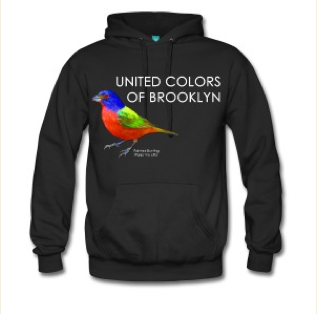
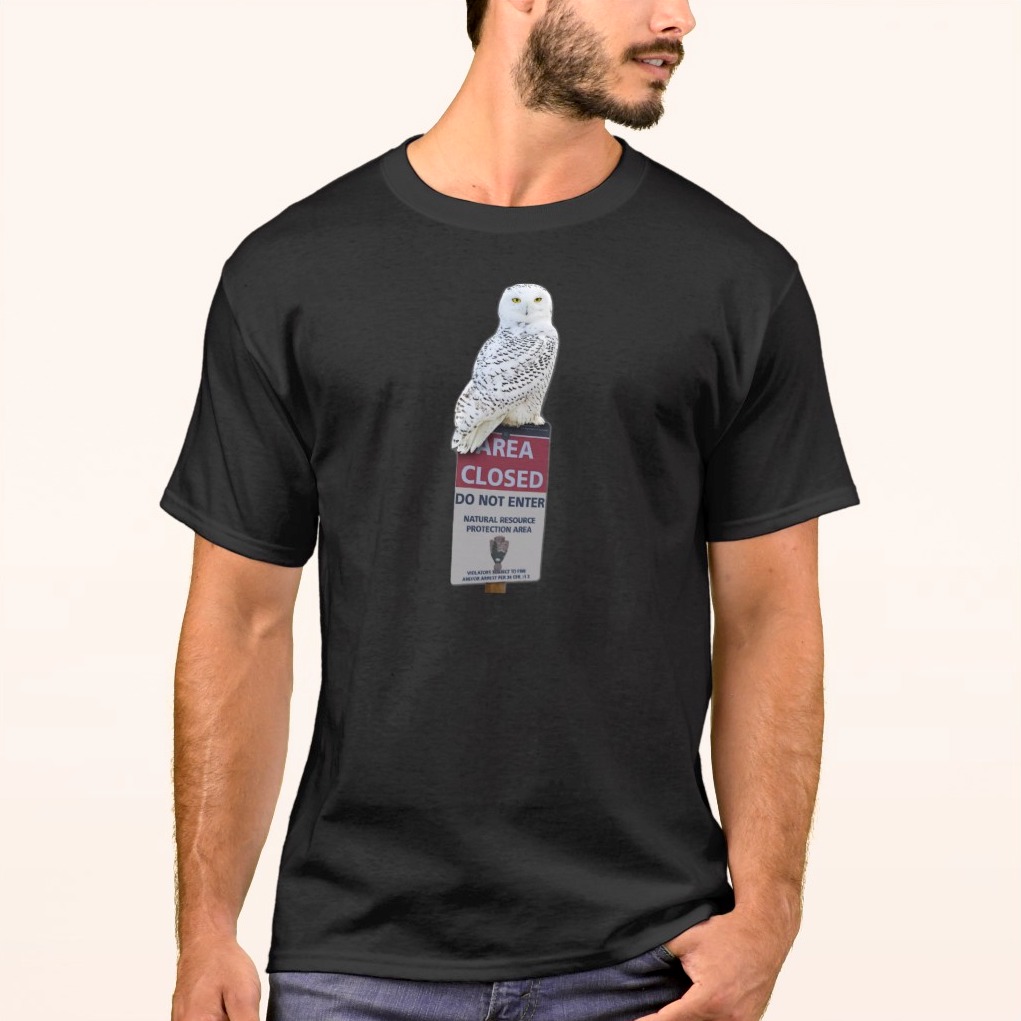
The logo is designed in the style of the old Brooklyn Dodger's logo and I created the sketch-style artwork of some of our local raptors from my photographs. I plan to add other falcons, hawks and owls over the next month. If you have any favs, let me know and I'll see what I can create. The shirts and hoodies are available in a variety of colors and most are made from organic cotton. Here's a sampling (click the image for a close-up of the artwork), but you can see all the products in the City Birder Store widget in the sidebar to the right.
<
...Read more

Monday, June 22, 2009

Upcoming Local Trips

Below is a list of upcoming local field trips for the weekend of June 27-28, 2009:

New York City Audubon Society

Sunday, June 28, 10 - 11:30am
Landscapes of Brooklyn's past - An environmental history of Brooklyn and and Prospect Park
Guide: Elyse Newman, Lefferts Historic House
Come explore the natural and human forces that have, over hundreds of years, shaped Brooklyn's ever-changing landscape. The tour will also explore how both natural and designed elements work together to shape the varying landscapes and waterways within Prospect Park. Meet at The Prospect Park Audubon Center. Limited to 20.
$20($18 for NYC Audubon members at the student level and up and for PPA members)
PPA members should call 212-691-7483 for special discount rate.


Urban Park Rangers

Saturday, Jun 27, 2009

Early Morning Birding
8:00 a.m.
MARINE PARK

Shore Ecology
11:00 a.m.
Multiple Parks Locations

Mycological Walk
11:00 a.m.
Multiple Parks Locations

Canoe the Creek
11:00 a.m.
Multiple Parks Locations

High Tide Canoeing
12:30 p.m. - 3:30 p.m.
Multiple Parks Locations

Canoe the Creek
12:30 p.m.
Multiple Parks Locations

Playground Pals
1:00 p.m.
Multiple Parks Locations

Buggin’ Out
1:00 p.m.
Multiple Parks Locations

Fishing Derby
1:00 p.m.
Multiple Parks Locations

Canoe the Creek
2:00 p.m.
Multiple Parks Locations

Creatures of the Night
7:00 p.m.
Multiple Parks Locations

*****

Sunday, Jun 28, 2009

Low Tide Fishing
9:00 a.m.
Multiple Parks Locations

Wildflower Walk
11:00 a.m.
Multiple Parks Locations

Canoeing Basics
11:00 a.m. - 3:00 p.m.
Multiple Parks Locations

Medicinal Plants
11:00 a.m.
Multiple Parks Locations

Raptor Watch
12:00 p.m.
Multiple Parks Locations

Dragons and Damsels
12:00 p.m.
Multiple Parks Locations

Nature Walk
1:00 p.m.
Multiple Parks Locations
...Read more

Sunday, June 21, 2009

One Nestling to Go

Yesterday I paid a brief visit to the Nelly's Lawn Red-tailed Hawk nest in Prospect Park. One of the three youngsters had fledged and was perched high in Elizabeth's Tuliptree. The youngest of the brood was still in the nest tree, standing on a branch under the nest. I couldn't find the third hawk and the rain made it difficult to find pretty much anything. Depending on the weather, I'll take a look around again today.

Saturday, June 20, 2009

Tompkins Square Fledgling Trouble

I received an email with a link to a "funny" Red-tailed Hawk story. A desperately hungry fledgling red-tail wandered into a restaurant near Tompkins Square Park looking for something to eat.

When Red-tailed Hawks first leave the nest they are a bit clueless and do not fear humans. The hawk in question actually jumped up on the writer's table and grabbed his BBQ chicken. You can read the entire story here. It was clear to me (especially after viewing the second photo) that this bird was in trouble. It looked thin and hadn't been preening its feathers, or at least not very well. I sent an email to a recently created discussion group about NYC raptors, expressing my concern. The park rangers were contacted and someone went over to Tompkins Square Park to search for the poor thing. This morning I received the following note:

From: Richard Simon
Sent: Friday, June 19, 2009


Just wanted to let you know that the bird from the [Tompkins] square park area was brought by someone to Animal General. It was identified by their staff as a red tail. I am not sure what its current condition is. We are awaiting a call back [from] Animal General.

...Read more

Thursday, June 18, 2009

Brooklyn Red-tailed Hawks

Prospect Park's trio of young Red-tailed Hawks look healthy, active and ready to leave their nest tree at any moment. The two juvenile hawks in Green-Wood Cemetery, on the other hand, are exploring the area surrounding their nest tree and one has already made a kill.

Upon arriving at Nelly's Lawn in Prospect Park, it became very apparent that the trio of young hawks are ready to fledge. All three have mastered branching and were perched on the large branches below the nest. The largest of the three seemed impatient and slightly hyperactive, wandering frequently from branch to branch, flying short distances to the more outlying perches. At one point, she flew back up to the nest where she appeared to be feeding on scraps of previous meals.

videoNelly, their mother, was perched in her usual spot in the tuliptree, just to the northwest. There are several Baltimore Orioles nesting in the vicinity and, whenever either of the adult hawks are monitoring the young hawks from that spot, the orioles noisily dive-bomb them. On this particular occasion, I was amused when a Blue-gray Gnatcatcher started to attack Nelly. The gnatcatcher weighs about 6 grams, compared to the Red-tailed Hawk's hefty 2.4 pound bulk. Nelly didn't appear to notice the tiny bird's insect-like screams or its "taps" on the back of her head.

Nelly and Max's triplets are clearly ready to fledge. Their tails are much longer than the last time I checked in on them, so I counted the bands. There were six, dark brown bands, which is what the Green-Wood Cemetery youngsters now have.

In Green-Wood Cemetery, one of the offspring fledged on or around Saturday. When I returned with Marge yesterday, the second hawk had left the nest. It took me all of about a minute to find him, as he was perched right at the side of the road, only about 12 feet up. There was a young couple walking up the road, about to walk right under him, so I asked them if they'd like to see a "baby" Red-tailed Hawk. We watched him from a low rise on the opposite side of the road and spoke for a few minutes about the hawks of Brooklyn. The whole time that we were speaking I heard several robins making distress calls from just south of the nest tree. When the couple left, I headed over to see what was causing all the commotion ... I mean, I figured it was one of the hawks, I just wasn't sure who or why.

videoI quickly tracked the sounds to an Atlas Cedar across the road from the "Drummer Boy". The older of the two fledglings had discovered a robin's nest. I wasn't sure if she was raiding it or just standing next to it, because she didn't seem to be doing anything. The adult robins weren't taking a chance and several were calling and taking swipes at her. Then I witnessed the unimaginable, she grabbed the nest in one foot and began pulling it from the branch to which it was anchored. Eventually, the entire nest fell from the tree and a nestling robin came tumbling to the ground.

I ran to where the chick landed and, amazingly, it seemed no worse for the wear. It peeped loudly a few times as I picked it up and looked for a safe place to put it. Marge picked up the nest and I suggested using it as a base in a nearby Yew tree for the chick to perch in. After I put the little thing in the Yew we backed up to allow the parents to continue feeding it. It only took a few minutes, but one of the adults did fly into the Yew tree to check on its remaining offspring. I understand the role of predators and prey in the grand scheme of things, but it was a little disturbing to see that the young Red-tailed Hawk had actually taken and eaten a second robin chick. On the other hand, I was also extremely impressed that the fledgling hawk had learned, in only a matter of days, how to fend for itself.

videoA short while later, Junior returned to the area with a freshly killed pigeon. He perched in a maple tree about 50 yards from the nest tree and began calling for his offspring. The older of the two fledgling hawks arrived first and claimed the huge meal. Her sibling then arrived, but could only call and watch as his nest mate dug her talons into the pigeon. The only problem was that she didn't seem to quite understand what to do next. Walking back and forth along the branch, trying to figure out how to balance, pluck the bird, and keep it away from another hungry mouth, appeared to be too big a challenge. She lost hold of the bird and dropped it to the ground.

The two young hawks looked around, a little baffled, trying to locate the vanished meal. I walked to the base of the tree, picked up the pigeon by the wing and showed it to them. They didn't seem to understand right away, so I swung it around, then tossed it into the grass below them. Marge and I backed up several yards and sat down to watch.

One of the hawks seemed unconcerned and flew off to another branch. The other one did something kind of amusing. The branch she was on drooped slightly, the end of which bent into a "u" shape, bringing it fairly close to the ground. The young hawk began slowly walking backwards, down the branch. Once she made it to the lower, "u" section of the branch, she stopped, carefully scoped out the dead pigeon, then swooped down on it, talons opened for the kill. She seemed relatively wary of me, but I was able to crawl on my belly within a few feet and watch her eye to eye. After a few minutes, she carried her meal to the base of the tree where she repeatedly footed it before plucking and eating. Footing seems to be an instinctive behavior that insures that they have killed their prey.

These two young Red-tailed Hawks appear to be in a good location and, certainly, in good hands as their parents are extremely vigilant and really good providers.
...Read more

Tuesday, June 16, 2009

Astoria Fledge News

This weekend Jules Corkery posted the following note about the Astoria, Triborough Bridge hawks:

From: Jules Corkery
Date: June 14, 2009 6:07:53 PM EDT

Subject: Triborough Bridge Nest graduates a fledgeling


Early this morning we saw one of the triborough bridge babies venture out onto the metal pipe only to wobble a little and get himself back onto the nest. All three babies were fat and comfy this morning looking out onto their world.


We went back around 12:15 this afternoon and parks staff were scrambling to get a box in which to put one of the little guys who moments earlier had flown off the nest. He glided north across Hoyt Avenue North - into the trees that surround a small section of paved area that people use as a volley ball court. (A few years ago one of the fledges landed in the same area and spent a few days hanging out of the 2 rows of fencing that separate the pavement area from the row of backyards on the next street.) The wind was blowing east and it's lucky that he didn't glide any further east as he might have landed on 21st Street!


There was a volley ball game happening and the only person to notice any of the chaos was a young boy of about 10 years old. Fortunately, the little fledge got himself to the ground and was nicely situated in the strip of land between the two fences - it's about 5 feet wide and 50 feet long and overgrown with grass and weeds. However, he was very close to 21st Street and if the volleyball players had realized he was there they could have easily spooked him out into traffic. So, the little guy was boxed up, put in the truck, and the rangers were called. We witnessed this from a fair distance away as we didn't want to add to the bird's distress and because of this we never got a close look at him. What we could see was that he was definitely upright and alert. I also called Park's central headquarters just to make sure that in all the confusion they actually got a call. I understand that the Horvaths will be taking him in for a while.


Good luck, you guys!


It looks like the construction of the new fencing around the deep end of Astoria Pool is completed. I would recommend releasing the fledge in the same area in which last year's fledges were released. This area remains a relatively quiet part of the park, has high tree cover, and is accessible to the high diving board (or should I say high dining board). Max, the District 1 Manager of Queens Parks & Rec, is on vacation right now so I'm not sure who could tell us if there are other plans for construction at that end of the pool. Regardless, Atlas and Athena will be glad to get their little one back in the care as soon as can be.


Talk to you all soon!


Jules


Here's Bobby's follow-up:

From: Bobby Horvath
Date: June 14, 2009 9:00:11 PM EDT

Subject: Re: Triborough Bridge Nest graduates a fledgeling


The parks personel called me about this fledgling and they delivered him to my firehouse as I was unfortunately at work today. Cathy came and picked him right up , brought him home and he's fine now , just a bit stressed but thats to be expected. Theres no simple solution to these early fledges besides waiting to replace with the siblings when the time is right. It could be dangerous to the remaining siblings to attempt to replace to the nest at this advanced stage so for now just one out is better than 2 or 3. Hopefully they stay long enough till better flighted such as the Briarwood youngster that Jeff has been following. From day 1 that bird was spotted on rooftops taller than where he originated from. The blog shots of the Riverside young also show good exercise oppurtunites as well for those. Certain sites will continue to pose problems for early fledglings. The Unispere young we have are ready to go back and now I was told the last fledgling recently left with the parents. I will need to locate them first so I can replace the 2 closeby. I've asked parks to try to find them. I'll advise the group when we have the chance to reunite them. It could be even tomorrow or Tuesday.


Bobby

...Read more

Red-tailed Hawk fledge news

Marge and Joe kept an eye on the youngsters in Green-Wood Cemetery while I looked in on the trio in Prospect Park. As of last Thursday, the Nelly's Lawn hawks still seemed to be sticking close to the nest, but I received good news from the cemetery (that just sounds too weird).

Marge told me that they scanned the nest tree and surrounding area for a long time, but couldn't find the two young Red-tailed Hawks. Presumably, they had both fledged, but where were they hiding?

Very early Friday morning I began feeling the effects of the flu, but tried everything to fight it. I had to co-lead a trip on Saturday and didn't want to cancel. I put on my best face and pulled it together. When I got home in the afternoon I went to bed. My body felt like it had been trampled by a herd of wildebeest, and I probably should have stayed in bed, but the allure of just-fledged Red-tailed Hawk is so strong that it could probably pull me away from Death's door. On Sunday, against my better judgement, I dragged myself over to Green-Wood Cemetery.

videoMarge met me at the entrance and we drove over to Linden Avenue. She parked just to the east of the nest. As soon as I got out of the car I noticed something moving near the top of the tree. Sure enough, one of the youngsters was still in the tree, but had climbed nearly to the top and several yards from the nest. The tree is a mature Littleleaf Linden with lots of dense foliage and flowers, it is very easy to loose even a large hawk within the crown. The silly bird didn't seem very interested in flapping his wings, but did spend a lot of time snapping at bees feeding on the fragrant linden flowers.

We spent about thirty minutes circling the nest tree looking for the fledgling and scanning the nest tree from different angles. The pair's father, Junior, was perched in a Cedar tree to the east of the nest, making occasional, brief forays towards Ocean Hill. Big Mama, spent most of her time standing guard from a pine tree on the west side of the nest. Marge had to leave and I continued the search alone. I followed the trail of alert calls from robins and other birds, but couldn't find the missing fledgling. Instead, they just kept leading my back to Big Mama or Junior. Finally, I decided to stop and just listen for a while. At this point in a young Red-tailed Hawk's development the parents begin to withhold food deliveries. It may sound cruel, but it forces the youngsters to start to explore their surroundings and hunt for themselves. Eventually, the fledgling will get hungry and start to make a high-pitched begging call.

videoWithin about 30 minutes I heard the first high, "klee, klee, klee" and it was coming from directly over my head! The young hawk had fledged, alright, but only made it to a planetree that was about 50 years from the nest tree. I set up my scope to shoot some videos just as a tour group appeared over the hill behind me. They were a group of birders from the Audubon Society, so I offered them looks through my scope...not that you really needed a scope, as the bird wasn't very high up in the tree.

At about 2pm the hungry fledgling took off from her perch and headed, North, towards the Drummer Boy. She looked healthy, confident and made an impressive landing. A short while later, and after a lot of whinning, she took off again, heading directly towards me. This time she landed in a maple tree on the opposite side of the road from, and very close to, her nest tree. She caught the attention of a few Blue Jays, several robins and even a chickadee. The poor thing seemed out of her element and completely overwhelmed by the small flock of irrate, mobbing birds. I suppose she felt like there was only one place that she would be safe, so she headed right back to her nest tree. She landed a few yards below her nestmate, who just stared down at her from his perch at the top of the tree.

I stayed for as long as I could, hoping to see the other hawk fledge. He never did. I think it's safe to say that, though, that after two more days, he probably has taken his maiden voyage.
...Read more

Upcoming Local Trips

Below is a list of upcoming local field trips for the weekend of June 20-21, 2009:

New York City Audubon Society
Jamaica Bay Sunset Cruise
Saturday, June 20, 5:00-8:00pm
Guides: Don Riepe and Mickey Cohen, In partnership with the American Littoral Society
Enjoy a 3-hour cruise aboard the 100' boat "Golden Sunshine," leaving from Pier 2 in Sheepshead Bay, Brooklyn. Visit the backwater marshes near JFK Airport and learn about the history, ecology, and wildlife of the bay. See nesting peregrine falcon, osprey, egrets, shorebirds, and waterfowl. Includes wine and cheese, fruit, drinks, and snacks.
Price $45
For reservations, call 718-318-9344 or email driepe@nyc.rr.com

Rowing, Conservation, and Mill Rock Island
Saturday, June 20, 11-5pm
Guides: Gabriel Willow and Mary Nell Hawk In partnership with East River CREW
Meet at the East River esplanade at E96th St. Using eco-friendly human power, enjoy a rowng tour where you see birds at the water's level. View the gulls and cormorants on Mill Rock Island, and then cross to explore the Queens shoreline, near Socrates Sculpture Park, where herons are reported, and smaller birds visible from the water among a growth of restored indigenous grasses on the riverbank. Lunch will be provided ashore at nearby Hallet's Cove. A willingness to learn how to row in a fixed seat gig and moderate physical dexterity are required. It is easy to learn with our experienced coxswain. Bring water, hats, and binoculars. Limited to 11.
Price $118 ($106.20 for NYC Audubon members at the Senior/Student level and up)


Protectors of Pine Oak Woods
Saturday, June 20, 11 a.m. to 1 p.m.
Dragonflies and Damselflies, Meisner Pond/Buttonbush Swamp Walk
Join Sandra Mechanic, naturalist and photographer, for a guided tour around Meisner Pond and Buttonbush Swamp in search of a variety of dragonflies and damselflies.
Bring binoculars, guides and cameras. We will find that the Common Whitetail Dragonfly is an aggressive flier. The adults are attracted to the brown color of the mud.
Meet at the intersection of Rockland Avenue with Meisner Avenue.
For more information phone Dick Buegler at 718-761-7496

Sunday, June 21, 1 p.m. to 3 p.m.
Blue Trail to Latourette Woods
Join naturalist Sandra Mechanic on a stroll through the Latourette woods. Admire the Frank Lloyd Wright house along the way and see an American Larch or Tamarack, a rare conifer that sheds its needles annually. Look for the DEP label on the street corner grating saying "no dumping, leads to Blue Belt". The trail passes through a large forest of mixed age Tuliptrees as it winds down to Meisner Pond.
Park near the end of Old Mill Road, near St Andrews Church, off Arthur Kill Road.
For more information, Phone Dick Buegler at 718-761-7496


Urban Park Rangers
Saturday, Jun 20, 2009
Early Morning Birding
8:00 a.m.
MARINE PARK

Birding in Crotona
10:00 a.m.
Multiple Parks Locations

The Birds and the Bees
10:00 a.m.
Multiple Parks Locations

Canoe the Lullwater
11:00 a.m.
Multiple Parks Locations

Bug and Insect Hunt
11:00 a.m.
Multiple Parks Locations

Prospect Park Waterfall Hike
12:00 p.m.
Multiple Parks Locations

Canoe the Lullwater
12:30 p.m.
Multiple Parks Locations

Into the Depths: Part II
1:00 p.m.
Multiple Parks Locations

Children’s Hour
1:00 p.m.
Multiple Parks Locations

Canoe the Lullwater
2:00 p.m.
Multiple Parks Locations

Seashore Safari
3:00 p.m.
Multiple Parks Locations

Family Camping
7:00 p.m.
Category: Education, Nature

Sunday, Jun 21, 2009
Wilderness Survival Skills
11:00 a.m.
Multiple Parks Locations

Bug and Insect Hunt
11:00 a.m.
Multiple Parks Locations

Father’s Day Canoeing
11:00 a.m. - 3:00 p.m.
Multiple Parks Locations

Father’s Day Fishing
12:00 p.m.
Multiple Parks Locations

Father’s Day Fishing
1:00 p.m.
Multiple Parks Locations

The Reel Deal
2:00 p.m.
Multiple Parks Locations

Astronomy 101
2:00 p.m.
Multiple Parks Locations
...Read more

Weekly Species Highlights

Here are the weekly species highlights for the third week of June:

Bird: Eastern Kingbird (Tyrannus tyrannus) - A large, vocal "Tyrant" flycatcher, this conspicuous, easily identified bird has white underparts with blue-black back and wings. Its black tail has a white terminal band. Its head is also black, but has an inconspicuous crown of red feathers visible only when the bird is displaying. Their breeding range is from British Columbia across interior Canada to Maritime Provinces and south to northern California, central Texas, the Gulf coast, and Florida. They are common in our city parks, especially in fields and meadows close to water bodies. They are highly aggressive towards potential nest predators and larger birds and can be seen regularly attacking hawks & crows while making a high-pitched chattering sound. Eastern kingbirds are the most widespread of the genus Tyrranus. Kingbirds can be seen perched on treetops, fences, and utility poles, often feeding by flying out to catch insects and then returning to the same perch. They are important predators of insects during the breeding season. Eastern Kingbirds winter in South America, primarily in the western Amazon basin.

Insect: Daddy Longlegs (Family Phalangiidae) - This scary "spider" has an unjustified bad reputation and been subject to many urban myths. As a child I remember being told (after playing with one) that they are very poisonous, but that their fangs are too short to bite humans. Hmmmm. First of all, the Daddy Longlegs or Harvestmen isn't even a spider, but rather something related to the spiders, as are scorpions, ticks, mites, centipedes and millipedes. Spider's bodies consist of two parts, whereas, the Daddy Longleg's head, thorax, and abdomen are all fused together. Also, a Daddy Longlegs has just two eyes, instead of the spider's usual eight eyes. Unlike spiders, Daddy Longlegs do not spin silk. Finally, they are harmless as they do not produce any venom. Your average Daddy Longlegs feeds on aphids, caterpillars, beetles, flies, mites, small slugs, snails, earthworms, spiders, other harvestmen, decaying plant and animal matter, bird droppings and fungi. Birds prey on Daddy Longlegs, but they will release a stink odor as a defense against predators. There are between 100-150 Daddy-longlegs species in North America north of Mexico.

Wildflower: Lance-leaf Coreopsis (Coreopsis lanceolata) - Also known as Sand Coreopsis, this native perennial prefers full sun, sandy or rocky soil and mesic to dry conditions. Flowering from May-July it can be found in sizable colonies (like the one in the photo) along NYC's coast in places such as Ft. Tilden. Nearly a dozen other species of perennial yellow-flowered Coreopsis are found in the East. Some insect pollinators that benefit from this coreopsis include long-tongued bees, short-tongued bees, wasps, flies, butterflies, skippers, day-flying moths, and beetles. The long-tongued Coreopsis Miner Bee is a specialist visitor of Coreopsis spp. The caterpillars of the Dimorphic Gray and Wavy-Lined Emerald moths feed on the foliage. Some mammals occasionally feed on this and other Coreopsis species, including rabbits, groundhogs, livestock, and possibly deer.

videoTree: Eastern Cottonwood (Populus deltoides) - The Eastern Cottonwood as a highlight species seemed an obvious choice when I made a recent visit to the Ridgewood Reservoir. The cottonwood is fairly common around the perimeter of the reservoir basins. When I was there, the seed capsules of the numerous, huge trees had split open, releasing their abundant small seeds attached to cotton-like strands. I felt like I was standing in the middle of a sunny day snowstorm. This native cottonwood poplar grows throughout the eastern, central, and southwestern United States, the southernmost part of eastern Canada, and northeastern Mexico. It is a fast-growing tree reaching over 100 feet tall. The bark is silvery-white, smooth or lightly fissured when young, becoming dark gray and deeply fissured on mature trees. In natural conditions, it usually grows near rivers, with mud banks left after floods providing ideal conditions for seedling germination. They typically lives 70 to 100 years, but have the potential to live up to 400 years. It is a host plant for Mourning Cloak, Red-spotted Purple, Viceroy & Tiger Swallowtail butterflies.
...Read more

Monday, June 15, 2009

Stay Tuned

Sorry for the lack of posts. I've been fighting the flu. Hopefully, I'll be back tomorrow with trips, highlights and fledge updates. Now back to bed...