Check out my Green-Wood sponsored tours on their calendar pages here. You can also find me on Bluesky here
Celebrate your inner nerd with my new t-shirt design! Available on my Spreadshirt shop in multiple colors and products.

Wednesday, January 20, 2016

Upcoming Birding and Nature Trips

Below is a list of upcoming nature trips by local birding/conservation groups for the weekend of Saturday, January 23, 2016 to Sunday, January 24, 2016:

Brooklyn Bird Club
Sunday, January 24, 2015
Jones Beach, Long Island
Leader: Mike Yuan
Focus: coastal species, waterbirds, sea ducks, raptors, dune passerines
Car Fee: $22.00
Registrar: Mike Yuan mjyuan@gmail.com
Registration Period: January 16th - January 21st

**********

Gateway National Parks
Sunday, January 24, 2016
Hike the Trails of the North Forty Natural Area
Location: Floyd Bennett Field
Time: 10:00 AM to 12:00 PM
Fee Information: Free
Join American Littoral Society naturalist Mickey Maxwell Cohen to discover the enigmas of the winter woods. Participants will carpool from the Ryan Visitor Center to the North Forty trailhead. A magnifying glass will be helpful.
This is an American Littoral Society/ Gateway NRA partnership program.
Approx. 2 miles.

**********

Linnaean Society of New York
Saturday, January 23, 2016
Pelham Bay Park

Leader: Rob Jett
Registrar: Louise Fraza — louisefraza@yahoo.com or 212-534-6182
Registration opens: Monday January 11
Ride: $15

**********

New York Botanical Garden (Bronx)
Saturday, January 23, 2016
Debbie Becker leads a free bird walk at the Garden every Saturday from 11 a.m. to 12:30 p.m. beginning at the Reflecting Pool in the Leon Levy Visitor Center

**********

New York City Audubon Society
Saturday, January 23, 9am – Sun, January 24, 7pm
Winter Waterfowl Weekend at Montauk
Guide: Gabriel Willow
The gatherings of sea ducks around Montauk Point are the largest winter concentrations in New York State; the Christmas bird count on Montauk Point consistently tallies from 125 to 135 species, one of the best totals in the Northeast. Species that come to feed on the Point’s rich kelp and mussel beds include common and red-throated loon, common eider, all three scoter species, bufflehead, common goldeneye, great cormorant, and red-breasted merganser. Harlequin duck and king eider also occur here regularly during the winter. Accommodations at Daunt's Albatross in Montauk. Transport by passenger van included. Limited to 12. $300 ($50 single supplement)
Click here to register

Saturday, January 23, 2016, 8:30am – 10:30am
Eagle Watch and Bird Walk at Inwood Hill Park, Manhattan
Guide: Annie Barry
Meet at the western end of Dyckman Street in front of La Marina restaurant and join Annie Barry for a winter hike through the various landscapes and habitats of Inwood Hill Park. Located at the northern tip of Manhattan where the Harlem River meets the Hudson, Inwood Hill Park offers shoreline vistas, a relict forest and the last natural saltmarsh in Manhattan. We will begin with an eagle watch on the Hudson shore, then move into the forest to search for wintering and year-round birds, and finally to the saltmarsh to look for wintering ducks. Some hilly walking required. $36 (25)
Click here to register

Sunday, January 24, 2016, 12pm – 2pm
Winter Seals and Waterbirds of NY Harbor
Guide: NYC Audubon guide
Meet at South Street Seaport’s Pier 17 and come aboard NY Water Taxi’s eco-friendly vessel for a winter adventure in New York Harbor! Look for harbor seals on the rocky shores of Governor’s Island and the more remote Hoffman and Swinburne Islands. Learn about the surprisingly diverse winter birds of New York City, including ducks, geese, loons, and sandpipers, many of which migrate south from the Arctic. See the Statue of Liberty and pass under the Verrazano Bridge. Dress warmly! Limited to 90. To register, contact New York Water Taxi at 212-742-1969 or www.nywatertaxi.com. $35 for adults; $25 for children under 12; $105 for family pack for 2 adults and 2 children

**********

South Shore Audubon Society
Sunday, January 24, 2016
Hempstead Lake State Park

Notes:
All walks start at 9:00 A.M.
There is no walk if it rains or snows or temperature is below 25°F.
For more information or in case of questionable weather conditions, please phone Joe at 516 467-9498
For directions to our bird-watching locations, click here.

**********

Urban Park Rangers
Saturday, January 23, 2016
Birding: Super Winter Bird Walk at Grand Army Plaza Arch (in Grand Army Plaza), Brooklyn
10:00 a.m.–11:30 a.m.
Our Rangers will guide you to the best wildlife viewing spots in the urban jungle. Birding programs are appropriate for all skill levels and beginners are welcome.
Free!

Sunday, January 24, 2016
Birding: Winter Waterfowl at Forest Avenue and Silver Lake Park Road (in Silver Lake Park), Staten Island
10:00 a.m.–11:30 a.m.
Our Rangers will guide you to the best wildlife viewing spots in the urban jungle. Birding programs are appropriate for all skill levels and beginners are welcome.
Free!
...Read more

Saturday, January 16, 2016

Friday's Foto

Common Eider photo by Sean Sime

Common Eiders are the largest waterfowl in the Northern Hemisphere. This circumpolar species is typically found along northern seacoasts and nest primarily in the coastal high arctic regions of Canada and Siberia. A diving duck it feeds mainly on aquatic invertebrates, such as crustaceans, mollusks and sea urchins found in shallow waters around submerged ledges and reefs off rocky coastlines. Eider down is famous for its extreme insulating qualities and is used in large amounts in their nest lining. In some places, such as Iceland, the down is harvested commercially at coastal "eider farms," where the wild birds are encouraged to nest in sheltered nooks built for them.

The IUCN Red List recently uplisted their conservation status as "Near Threatened". Historically, by the end of the 19th century market hunting reduced southern population in the Atlantic to near extinction. That population currently is healthy. Arctic populations are declining. Some declines are thought to be the result of overharvesting of aquatic resources, pollution, disturbance and hunting. They are also vulnerable to oil spills.

Their scientific name Somateria mollissima means - Somateria Gr. som# a, somatos body; erion wool. mollissima / mollissimus L. mollissimus very soft (super. from mollis soft).

Tuesday, January 12, 2016

Treehugger Tuesday

The following is from the "Science Daily" website:

Biologists Examine Big Alaska Seabird Die-Off
January 12, 2016
AP / Powered by NewsLook.com

An estimated 8,000 common murres, a type of seabird, have been found dead on the shores of Alaska's Prince William Sound this winter. Biologists don't know why the birds are dying, but unusually warm ocean waters could be to blame. (Jan. 12) Video provided by AP

Monday, January 11, 2016

Upcoming Birding and Nature Trips

Below is a list of upcoming nature trips by local birding/conservation groups for the weekend of Saturday, January 16, 2016 to Sunday, January 17, 2016:

Brooklyn Bird Club
Sunday, January 17, 2016
Prospect Park Winter Walk
Leader: Ed Crowne
Focus: winter songbird species, ducks, raptors
No registration necessary. Meet at 8:30 am at park entrance Bartel Pritchard Square http://binged.it/1Uif5vl. Nearest train is "F" line to Prospect Park stop

**********

Gateway National Parks
Sunday, January 17, 2016
How Birds Survive Winter
Location: Jamaica Bay Wildlife Refuge | Map
Time: 1:00 PM to 2:00 PM
Fee Information: Free
Contact Phone Number: 718-987-6790
Cold weather got you down? Imagine you are a bird overwintering outdoors in Jamaica Bay! Food is scarce, the winds are harsh and there is definitely no hot cocoa to warm you up. Come to the Jamaica Bay Wildlife Refuge for a presentation and a brief walk as we explore winter survival in the animal kingdom!

**********

Great South Bay Audubon Society
Saturday January 16, 2016, 8:00am
Connetquot River SPP, Birding and Breakfast
Leaders: Bob and Edith Wilson, Ken Thompson Helga Merryman
Continental breakfast hosted by Friends of Connetquot.
Reservations required - call Connetquot River State Park Preserve at 581-1072 to register.
Registration fee $4. plus $8 parking fee per car - unless you have yearly Empire pass.

**********

Linnaean Society of New York
Saturday, January 16, 2016
Croton Point Park
Leader: Paul Keim
Registrar: Anne Lazarus — amlazarus47@gmail.com or 212-673-9059
Registration opens: Monday January 4
Public transportation

**********

New York Botanical Garden (Bronx)
Saturday, January 16, 2016
Debbie Becker leads a free bird walk at the Garden every Saturday from 11 a.m. to 12:30 p.m. beginning at the Reflecting Pool in the Leon Levy Visitor Center

**********

New York City Audubon Society
Saturday, January 16, 2016, 10:30am – 4:00pm
Snow Birds of Floyd Bennett Field and Fort Tilden, Queens
Guide: Gabriel Willow
Winter brings many rare birds to NYC that can’t be found here at any other time! Perhaps most exciting are the “snow birds”, such as snow buntings and snowy owls, of the Arctic tundra that can occasionally be found in tundra-like habitats further south, . We will travel to the abandoned runways of Floyd Bennett Field (America's first municipal airport) in search of these and other winter visitors (such as horned lark, American tree sparrow, and rough-legged hawk). We will then head to Fort Tilden and Breezy Point to look for wintering ducks, grebes, loons, and other seabirds along the beaches. Transport by passenger van included. Limited to 12. $86 (60)
Click here to register

Sunday, January 17, 2016, 12pm – 2pm
Winter Seals and Waterbirds of NY Harbor
Guide: NYC Audubon guide
Meet at South Street Seaport’s Pier 17 and come aboard NY Water Taxi’s eco-friendly vessel for a winter adventure in New York Harbor! Look for harbor seals on the rocky shores of Governor’s Island and the more remote Hoffman and Swinburne Islands. Learn about the surprisingly diverse winter birds of New York City, including ducks, geese, loons, and sandpipers, many of which migrate south from the Arctic. See the Statue of Liberty and pass under the Verrazano Bridge. Dress warmly! Limited to 90. To register, contact New York Water Taxi at 212-742-1969 or www.nywatertaxi.com. $35 for adults; $25 for children under 12; $105 for family pack for 2 adults and 2 children

**********

Protectors of Pine Oak Woods (Staten Island)
January 16, 2016, 10:00am – 2:00pm
Forest Restoration Workshop in the Egbertville Ravine
Cost: Free
Contact: Don Recklies 718-768-9036 / Chuck Perry 718-667-1393

**********

Queens County Bird Club
Sunday, January 17, 2016, 7:30am – 6:00pm
Montauk Point
Leader: Ian Resnick 917-626-9562
CONTACT LEADER to confirm meeting time/location

**********

Young Birders Club
Sunday, January 17, 2016
Annual Kickoff Meeting - Alley Pond Environmental Center
Sponsored by Queens County Bird Club
~ OPEN TO NYSYBC MEMBERS ONLY ~

This is our annual club kickoff mini-conference. We will start the day with a bird walk. After that, we'll head inside and warm up with hot drinks and snacks. Thus fortified, we will begin our annual kickoff meeting!

As the club continues to grow, these meetings are a great way for us all to connect and plan our activities for the upcoming year. The kickoff meeting will be run by club President Joe Hernandez. Your ideas will be heard and really do matter. Think about what you would like to do and see this year. We can't promise that we can do them all, but many of our past trips have been based on club member ideas.

The meeting will feature group discussions as well as presentations. We'll have some fun with a "Books and Stuff" swap along with a bird ID photo quiz. We'll also talk about the highlights of 2015, some general birding topics, 2016 field trip schedule, NYSYBC Big Day and World Series of Birding, NYSYBC scholarship program, NYSOA annual meeting, and election of officers as well as volunteer leadership positions.

Youth Members are encouraged to attend. It's YOUR club, and this is your chance to have a say in how it is run and what activities it will offer.
A morning snack and beverages will be provided, along with lunch (or bring your own food if you prefer).

The meeting is open to 2016 NYSYBC Youth Members in good standing, their parents, and other specifically invited adults only.

Permission form due by 1/8/16
...Read more

Friday, January 08, 2016

Friday's Foto

The Common Raven, a member of the corvid family, is arguably one of the most intelligent birds in the North Hemisphere. Once common in the eastern US they disappeared by the 20th century, primarily due to forest clearing. In recent years they have begun returning to New York City and Long Island, with pairs nesting in Manhattan and Brooklyn. Often heard before they are seen, they have a distinctive, deep croaking call. Learn more about raven intelligence on this PBS website.

Thursday, January 07, 2016

Early Brooklyn Hawk "Problem"

While perusing the "Brooklyn Daily Eagle" archives on the Brooklyn Public Library website I came across this little gem:

**********

Hawks Driving Birds Away

Correspondent Offers a Suggestion
(?) Anent Prospect Park

To the Editor of the Brooklyn Eagle:

While strolling through Prospect Park one morning last week I was astonished at the large number of sparrow hawks, which infested the park. Although I looked and listened carefully, I neither saw nor heard a single wren, catbird, goldfinch or woodpecker. All of these birds could be see in the park in large numbers a few years ago. The only birds to be seen now are a few (?) birds and robins and a number of hawks. In Central Park all sorts of birds can be seen. Something should be done by the Parks Department to thin out the hawks in Prospect Park, otherwise the small birds will be terminated and later in the season the insects and caterpillars will destroy and disfigure the trees and shrubbery. In Central Park the employes prowl around early in the morning with a gun and many of the hawks are shot and others go to safer quarters. Perhaps, if some of our game clubs were permitted to hunt the hawks they would be wiped out.

A Lover of Birds
Brooklyn, April 30, 1900

**********

I love the idea that park employees "prowled" the parks with firearms. Also, who would ever want to hurt such a beautiful animal?

Tuesday, January 05, 2016

Treehugger Tuesday

A Major Gas Leak That Few People Are Talking About

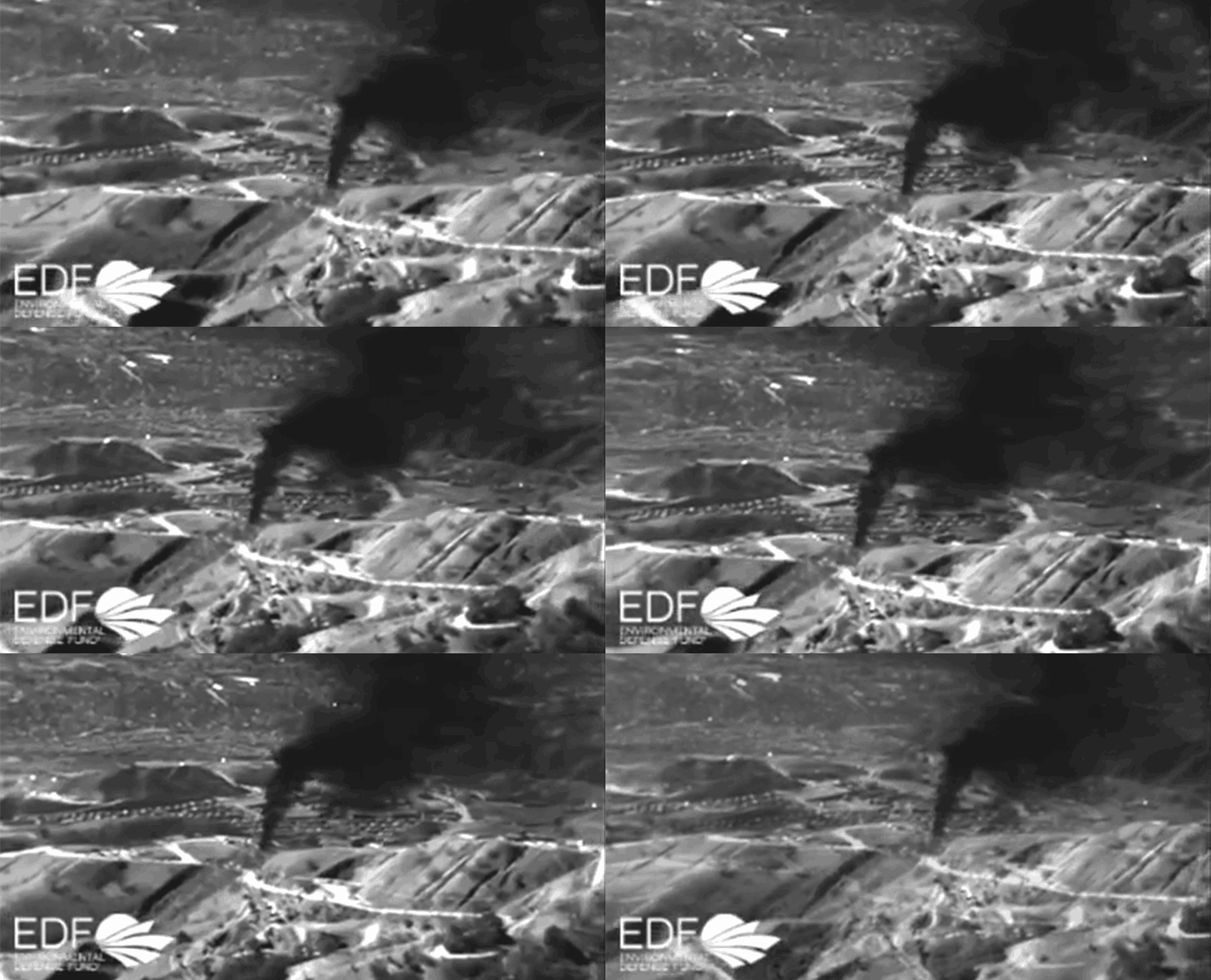
Gizmodo reports on a major methane gas leak that will have global impact:

LA's Gas Leak Is a Global Disaster
Maddie Stone
Wednesday 7:50pm

One of the worst environmental disasters of the decade is currently underway in a quiet community 25 miles northwest of Los Angeles. Putrid, methane-rich natural gas has been spewing into the air at an estimated rate of nearly 1,300 metric tons per day for over two months. Experts are calling it the climate version of the BP oil spill, and the leak isn’t going to be contained anytime soon.

Natural gas is often touted as a cleaner energy source than oil or coal, because of the lower greenhouse gas emissions associated with burning it. But as this disaster highlights, there are insidious risk to natural gas production. Coupled with weak regulation, they can make this energy source as dirty as the fossil fuels it’s meant to replace.

“The science is crystal clear: if you allow the methane to leak, you can wipe out its climate benefits,” Tim O’Connor, director of the Environmental Defense Fund’s Oil and Gas Program in California told Gizmodo.

In fact, everything about the leak is eerily reminiscent of the oil spills that have blackened oceans and beaches for over a century. These parallels underscore a hard truth: we need to transition off carbon-based fuels entirely to fix our planet.

Like 7 Million Cars


On October 23rd, a natural gas leak erupted at a storage well beneath the community of Porter Ranch. The well stores gas carried by pipelines from extraction operations hundreds of miles away in Texas, the Midwest, and the Rocky Mountains.

The leak has taken a serious toll on Porter Ranch residents, who for weeks have reported headaches, nausea, dizziness, and other symptoms. Methane is odorless and non-toxic, but natural gas producers inject it with trace quantities of sulfurous chemicals called mercaptans so that leaks can be detected by scent. According to Cyrus Rangan, director of the Toxics Epidemiology Program at LA County’s Department of Public Health, the stench from the leak is so foul that residents are having a physiologic response to it.

“People are having very real responses, based on their own sensitivity,” Rangan told Gizmodo. “In terms of acute chemical exposures, this is a really, really big deal.” Rangan estimates that somewhere between four and five thousand families have filed for help, with 2,200 families temporarily relocated so far.


As of this week, the leak has sent over 73,000 metric tons of methane gas skyward, according to estimates published by the Environmental Defense Fund, which is providing real-time updates on the situation. And that’s a big problem for our climate. Although short-lived in the atmosphere, methane is a potent greenhouse gas, with up to 80 times the global warming potential of CO2 in the first twenty years of its lifespan. 73,000 metric tons of methane is the global warming equivalent of over six million metric tons of CO2. Put another way, the daily emissions from Porter Ranch are essentially equivalent to sticking seven million additional cars on the road.

Plugging the Hole and Fixing the Problem

The first order of business for California is getting this well plugged. After several failed attempts to stop the flow of gas using conventional methods, SoCalGas began drilling a secondary “relief well” on December 4th. This well will intersect the leaky one and plug it. “After we intercept the well at more than 8,500 feet of measured depth, we will pump heavy fluids and drilling mud into the bottom of the leaking well to stop the flow of gas up from its source, the reservoir,” a statement provided to Gizmodo by SoCalGas, which manages the well, reads. “Once the flow of gas has been stopped, we will pump cement into the well to permanently seal the leak.”

Here’s what the entire operation will look like:


Image via SoCalGas

At last check-in, the drilling operation had reached a depth of 3,850 feet, and—in an important milestone—workers have now identified the seven-inch wide leaky gas pipe using magnetic ranging technology.

Still, SoCalGas warns that plugging the leak and stopping the flow of methane could take until the end of March.

Estimates from California’s Air and Resources Board show that total statewide methane emissions rose 25% this fall, dramatically diminishing any climate benefit natural gas industry offers. “SoCalGas recognizes the impact this incident is having on the environment,” SoCalGas spokesperson Anne Silva told Gizmodo in an email. “While working to stop the gas leak and alleviate its impact on the community, we also have been evaluating options to mitigate the environmental impact.”

But whatever mitigation measures SoCalGas takes, the leak highlights the shortcomings of natural gas—and how it’s regulated.

Nobody’s sure exactly how the Porter Ranch leak started, but a report by the EDF paints a disturbing picture of the state of natural gas pipes around Los Angeles. Nearly 40 percent of the pipes in SoCalGas’ jurisdiction are over 50 years old, and they’re leaking everywhere. The EDF reports an average of one methane leak every four to five miles across Pasadena, Inglewood, and Chino, three geographically disparate neighborhoods. These leaks vary from less than 1,000 to over 60,000 liters of natural gas per day. That means tens of thousands more cars worth of carbon emissions thanks to crappy infrastructure.

But this isn’t just an LA problem. Another report by the EDF estimated over 65 billion cubic feet, or approximately 1.3 million metric tones of natural gas leakage on federal and tribal lands in 2013 alone. “Globally, we know that more methane is leaked into the air from oil and gas infrastructure than the entire gas production of Norway—which is one of the world’s leading gas producers,” O’Connor said. “Methane is a significant problem, and in the US, it can erode the climate benefit of the gas industry.”

Nationwide, O’Connor estimates there are approximately 400 underground methane storage areas subject to little to no federal regulation—other Porter Ranch disasters waiting to happen. “These facilities are exempt from federal requirements for underground injections, and they fly under the radar until catastrophes strike,” he said.

And that’s not to mention leaks during drilling, transportation through pipelines, and distribution. If we’re going to see a net climate benefit from natural gas production over fossil fuels, experts say no more than 3 percent of gas can leak during the entire production process. In some parts of the country, we’re well beyond that figure. In other areas, the amount of leakage simply isn’t known.

For the first time this year, the EPA has introduced national standards that would directly regulate methane emissions from oil and gas facilities built in the future. But as the EDF points out, these rules say nothing about facilities already in operation. If the natural gas industry wants to sell an environmentally-friendly alternative to oil, all of its infrastructure needs to be air-tight.

“We need to think of natural gas as a bridge fuel, “ O’Connor said. “It’s an energy source that can have a benefit, but that benefit is only realized if you keep it in the pipes.”
...Read more

Monday, January 04, 2016

Upcoming Birding and Nature Trips

Below is a list of upcoming nature trips by local birding/conservation groups for the weekend of Saturday, January 9, 2016 to Sunday, January 10, 2016:

Brooklyn Bird Club
Saturday, January 9, 2016
Pelham Bay Park, Bronx
Leader: Jack Rothman
Focus: Woods birding, winter species, raptors, coastal birding for ducks and other waterfowl
Car Fee: $20.00
Registrar: Janet Schumacher janets33@optonline.net or 718-594-7480
Registration Period: January 2nd - January 7th

**********

Eastern Long Island Audubon Society
​Saturday, January 9, 2016 at 8:00am
Lakes Around Patchogue
Trip Leader: John McNeil
Join John for a half-day excursion to what he calls “God’s little oases for wintering waterfowl.” Hopefully there will be a surprise or two to peak your interest! Meet at Swan Lake Preserve on Montauk Highway in East Patchogue. Contact John at 631.281.2623 for details. On the day of the trip, John’s cell is 631.219.8947

**********

Gateway National Parks
Sunday, January 10, 2016
How birds Survive Winter
Location: Jamaica Bay Wildlife Refuge | Map
Time: 1:00 PM to 2:00 PM
Fee Information: Free
Contact Phone Number: 718-987-6790
Cold weather got you down? Imagine you are a bird overwintering outdoors in Jamaica Bay! Food is scarce, the winds are harsh and there is definitely no hot cocoa to warm you up. Come to the Jamaica Bay Wildlife Refuge for a presentation and a brief walk as we explore winter survival in the animal kingdom!

**********

Great South Bay Audubon Society
Saturday January 9, 2016, 9:00am
Montauk
Leaders: Bob Grover (516-318-8536), Ken Thompson (631-612-8028)
Meet at Lighthouse parking lot. Latecomers can still join in the vicinity of the restaurant overlook. Directions Route 27 to 27A to end.

**********

Hudson River Audubon Society
Saturday, January 9, 2016
Short-eared Owls of the Shawangunk Grasslands NWR
Meet us at Lenoir 2:30 PM for car pooling and directions or meet us at the refuge at 4:00 PM. Up to a dozen Short-eared Owls winter at this former airport. As dusk settles on the refuge the owls come out at start to roam the refuge for prey. Sunset is at 4:30 PM. Before dusk we’ll look for other wintering birds such as Northern Harrier (Marsh Hawk) and maybe even a Rough-legged Hawk. Dress warm. We will be returning after dark.
http://www.hras.org/wtobird/shawangunk.html

**********

Linnaean Society of New York
Saturday January 9, 2016
Jones Beach and Point Lookout
Leader: Richard ZainEldeen
Registrar: Ellen Hoffman — ellenh33@icloud.com or 917-903-3486
Registration opens: Monday December 28
Ride: $25

**********

Littoral Society
Friday, January 08, 2016
Montauk Winter Weekend
Join us for a weekend of seals, seabirds and hikes on the shorelines and woods of Montauk, Long Island, NY. Visit the Walking Dunes, historic Montauk lighthouse and bluffs, Camp Hero and Napeague forest. Hikes and nature walks will by led by American Littoral Society Northeast Chapter Director Don Riepe.
Price includes two nights at the luxurious Manor House, five meals, five guided hikes, two evening programs, and a star watch.
For more information or to make reservations call 718-474-0896 or email donriepe@gmail.com.
Contact : call 718-474-0896 or email donriepe@gmail.com

**********

New York Botanical Garden (Bronx)
Saturday, January 9, 2016
Debbie Becker leads a free bird walk at the Garden every Saturday from 11 a.m. to 12:30 p.m. beginning at the Reflecting Pool in the Leon Levy Visitor Center

**********

New York City Audubon Society
Friday, January 8, 12am – Mon, January 11, 12am
Montauk Winter Weekend
Guides: Mike Bottini, Mickey Cohen, Don Riepe with American Littoral Society
Spend a quiet weekend at Montauk during peak winter birding time. Visit the seal haul-out and see many species of of seabirds including loons, scoters, and goldeneye. Accommodations at the luxurious Manor House. For reservations, contact Don Riepe at 718-474-0896 or donriepe@gmail.com. $395

Saturday, January 9, 2016, 9am – 6pm
Winter Birding on the South Shore of Long Island: Jones Beach and Shinnecock Inlet
Guide: Gabriel Willow
Winter in NY brings the excitement of possibility: Will snowy owls appear in the dunes? Will harlequin ducks move westward from Cape Cod & Montauk, and appear in closer waters? Will irruptive northern finches and bohemian waxwings move south from Canada? All of these species and more are possible on Long Island in the winter, along with more expected species such as loons, grebes, scaup, eider, northern harriers, purple sandpiper, and more. Winter affords a unique and diverse set of species, so bundle up and brave the cold for some of the best birding our area has to offer! We will explore the dunes, pines, and coastal waterways of Jones Beach, Dune Road, and Shinnecock Inlet. Van transportation included.
Limited to 12. $93 (65)
Click here to register

Sunday, January 10, 2016, 9:30am – 11:30am
Winter Birding Along the Hudson: Wave Hill
Guide: Gabriel Willow with Wave Hill
Meet at the Perkins Visitor Center. The Hudson River valley hosts an impressive diversity of bird species, even during the winter months. Come explore the beautiful gardens and woodlands of Wave Hill and observe the hardy birds that spend the winter in this urban oasis. Advanced registration is recommended, either online, at the Perkins Visitor Center, or by calling 718-549-3200 x251. Walks run rain or shine; in case of severe weather call the number above for updates. Ages 10 and up welcome with an adult. NYC Audubon members enjoy two-for-one admission

Sunday, January 10, 2016, 10am – 5pm
Birding Gems of Staten Island: Winter at Freshkills Park
Guides: Cliff Hagen and Tod Winston
With NYC Department of Parks and Recreation
Meet at the Manhatttan terminal of the Staten Island Ferry. Winter at Freshkills Park is an exciting time for birding! The grass-covered slopes offer birds plenty of seed and shelter to manage the difficult cold. A number of sparrows including song, savannah, white-throated and white-crowned enjoy Freshkills throughout the winter, and on the flatter, wind-swept areas of the mounds, flocks of horned lark and snow bunting huddle close and stay low as they feed among barrens areas. Down below the mounds are a crisscross of tidal creeks filled with a variety of waterfowl. Grebes, geese and coots swim alongside over a dozen species of ducks. Of particular interest are the teal, mergansers and pintails which frequent Freshkills each winter. Transport by passenger van on S.I. included. Limited to 12. $68 (47)
Click here to register

Sunday, January 10, 2016, 12pm – 2pm
Winter Seals and Waterbirds of NY Harbor
Guide: NYC Audubon guide
Meet at South Street Seaport’s Pier 17 and come aboard NY Water Taxi’s eco-friendly vessel for a winter adventure in New York Harbor! Look for harbor seals on the rocky shores of Governor’s Island and the more remote Hoffman and Swinburne Islands. Learn about the surprisingly diverse winter birds of New York City, including ducks, geese, loons, and sandpipers, many of which migrate south from the Arctic. See the Statue of Liberty and pass under the Verrazano Bridge. Dress warmly! Limited to 90. To register, contact New York Water Taxi at 212-742-1969 or www.nywatertaxi.com. $35 for adults; $25 for children under 12; $105 for family pack for 2 adults and 2 children

**********

Protectors of Pine Oak Woods
Saturday, January 9, 2016, 1:00pm – 3:00pm
Buck’s Hollow and/or Heyerdahl Hill
Cost: Free
Contact: John Paul Learn 718-619-5051
Located in the Greenbelt, Heyerdahl Hill is nestled in an impressive stretch of woodland, holding ruins of a stone home built in the 1800s and plants and trees rarely seen in urban woodlands. We will meet at the stone wall on Meisner Ave, located by the intersection of Rockland Avenue and Meisner Avenue (http://goo.gl/maps/YP1HI).

Sunday, January 10, 2016, 1:00pm – 3:00pm
Acme Pond
Cost: Free
Contact: John Paul Learn 718-619-5051
Acme Pond is a diverse ecosystem, located on the north side of Hylan Boulevard across from Wolfe’s Pond Park. This walk takes us through hiking trails in some of the most idyllic woodlands in all of NYC. The trail offers views of the freshwater pond and assortment of small swampy areas. Meet at the corner of Seguine Avenue and Herbert Street. Street parking is available on Herbert Street and in parking lots at the end of Herbert Street (http://goo.gl/maps/59dvC).

**********

Queens County Bird Club
Saturday, January 9, 2016, 7:30am – 12:00pm
Point Lookout
Leader: Arie Gilbert 917-693-7178
CONTACT LEADER to confirm meeting time/location

**********

South Shore Audubon Society
Sunday, January 10, 2016
Pelham Bay Park

All walks start at 9:00 A.M.
There is no walk if it rains or snows or temperature is below 25°F.
For more information or in case of questionable weather conditions, please phone Joe at 516 467-9498.
For directions to our bird-watching locations, click here.

**********

Urban Park Rangers
Saturday, January 9, 2016
Birding: Eagles at Payson Center (in Inwood Hill Park), Manhattan
9:00 a.m.–10:30 a.m.
New York City is home to an amazing abundance of wildlife. Our Rangers will guide you to the best eagle-viewing spots at Inwood Hill Park. All skill levels welcome.
Free!

Sunday, January 10, 2016
Winter Birding at Perkins Visitors Center (in Wave Hill), Bronx
9:30 a.m.–10:30 a.m.
The Hudson River valley hosts an impressive diversity of bird species, even during the winter months. Explore Wave Hill’s tranquil gardens and woodlands with naturalist Gabriel…
...Read more

Tuesday, December 29, 2015

Treehugger Tuesday

Bikes vs. Cars
A film by Fredrik Gertten

New York Times Critics' Pick!

Bikes vs Cars depicts a global crisis that we all deep down know we need to talk about: climate, earth's resources, cities where the entire surface is consumed by the car. An ever-growing, dirty, noisy traffic chaos. The bike is a great tool for change, but the powerful interests who gain from the private car invest billions each year on lobbying and advertising to protect their business. In the film we meet activists and thinkers who are fighting for better cities, who refuse to stop riding despite the increasing number killed in traffic.

Monday, December 28, 2015

Upcoming Birding and Nature Trips

Below is a list of upcoming nature trips by local birding/conservation groups for the weekend of Friday, January 1, 2016 to Sunday, January 3, 2016:

Audubon Center in Prospect Park
Sunday, January 3 , 10 am – 11 am
Early Morning Bird Walk: Bring in the New Year with Birds
Join the Prospect Park Alliance and explore the Park’s nature trails and discover the beautiful plumage and fascinating behavior of the Park’s wintering ducks. Please note this tour leaves promptly at 10 am. Led by the Brooklyn Bird Club.

**********

Brooklyn Bird Club
Saturday, January 2, 2016
Marathon Tour of Brooklyn's Southern Beaches
Leader: Peter Dorosh
Focus: winter gulls, ducks, sea bird waterfowl, waterbirds; dune species.
Registrar: Peter Dorosh 347-622-3559 (text only) prosbird@aol.com (for more info)
Meet: 8:00 am at the Q train stop "Brighton Beach" off hours section benches by token booth http://web.mta.info/nyct/service/qline.htm
Note: The total hike will approach 9 miles, birding first Brighton Beach, Sheepshead Bay, little known Manhattan Beach, Plumb Beach, then in reverse back towards Coney Island, Norton Point and Coney Island Creek. This is an all day affair. We return to Stillwell Avenue train terminal. Dress warm or appropriate winter wear and proper footwear. We may stop in a diner or eatery on Emmons Ave.

**********

Gateway National Parks
Friday, January 1, 2016
New Year’s Day Beach Walk
Location: Fort Tilden, Building 1. | Map
Time: 11:00 AM to 1:00 PM
Fee Information: FREE
Contact Phone Number: (732) 291 – 0055
Meet at Ford Tilden in Breezy Point for a brisk hike along the beach, dunes and woods to welcome in the New Year. Look for Saw-whet and Snowy Owls. Warm up and enjoy light refreshments afterward at the Rockaway Artists Alliance building.
Leaders: Mickey Maxwell Cohen and Don Riepe. With American Littoral Society and NYC Audubon.
2 mile hike.

**********

Littoral Society
Friday, January 1, 2016, 11:00am - 01:00pm
New Year's Day Beach Walk
Meet at Fort Tilden in Breezy Point. Walk will be led by Mickey Cohen and Don Riepe. The walk is in partnership with Gateway National Recreation Area and the NYC Audubon Society.
Following the walk, enjoy refreshments and cookies at the Rockaway Artists Alliance building. No reservations necessary.
Location : Fort Tilden, NY

**********

New York Botanical Garden (Bronx)
Saturday, January 2, 2016
Debbie Becker leads a free bird walk at the Garden every Saturday from 11 a.m. to 12:30 p.m. beginning at the Reflecting Pool in the Leon Levy Visitor Center

**********

New York City Audubon Society
Friday, January 1, 2016, 11am – 1pm
New Year's Day Beach Walk at Fort Tilden
Guide: Don Riepe, Mickey Cohen with American Littoral Society and Gateway NRA
Meet at Fort Tilden in Breezy Point for a brisk hike along the beach, dunes and woods to welcome in the new year. Look for Saw-whet and Snowy Owls.
Enjoy champagne, coffee and cookies afterward at the Rockaway Artists Allianced bldg.
Leaders: Mickey Cohen, Don Riepe. With American Littoral Society and Gateway NRA.
For info, call (718) 474-0896. No reservations necessary. Free

Sunday, January 3, 2016, 10am – 1pm
Central Park Winter Walk
Guide: Gabriel Willow
Meet at the entrance to Central Park at Central Park West and 72nd Street. Some of the best sightings await hardy nature-lovers willing to venture out in winter! Several species of owls can be seen in Central Park for example, but generally only in the colder months. "Winter finches" such as Pine Siskins, Redpolls, and Crossbills have also been found at the feeders or in conifers in the park. Observing the adaptations for cold-weather survival among Blue Jays, Titmice, and other resident species is fascinating as well. Warm up after the walk with a hot chocolate by the fireplace at the Loeb Boathouse. Limited to 15. $36 (25)
Click here to register

**********

Protectors of Pine Oak Woods
Friday, January 1, 2016, 10:00am – 2:00pm
26th Annual New Year’s Day Walk to Crooke’s Point
Cost: Free
Contact: Jim Scarcella / Cliff Hagen 718-873-4291 / 718-313-8591
Join NRPA and PPOW for a healthy start to a fantastic New Year. Gather in the parking lot at Hylan Blvd. and carpool to the last lot before Crooke’s Point. The group will observe wintering birds and dormant grasses while discussing ideas and concerns for the year ahead. After a half mile walk to the point, we will share treats and tales in celebration of the New Year. We continue to the harbor before returning to the cars.

Saturday, January 2, 2016, 12:00pm – 2:00pm
Clay Pits “After the Rut”
Cost: Free
Contact: Clay Wollney 718-869-6327
The deer have recently finished the rutting season and the males are calming down. The antlers, which are no longer needed, are shed at this time. In addition to searching for shed antlers, we will examine the impact that the large number of deer living here have had on this unique and shrinking pine – oak ecosystem. Additionally, we will take a look at the new developments along the park boundaries in terms of their impact on the park and contemplate the impact of recreational use in terms of the original reasons that the park exists in the first place.

**********

South Shore Audubon Society
Sunday, January 3, 2016
Mill Pond Park

All walks start at 9:00 A.M.
There is no walk if it rains or snows or temperature is below 25°F.
For more information or in case of questionable weather conditions, please phone Joe at 516 467-9498.
For directions to our bird-watching locations, click here.
...Read more

Wednesday, December 23, 2015

Tuesday, December 22, 2015

Brooklyn Christmas Bird Count Overview

Given the past 2 month's unseasonably warm weather with few intervals of northwest winds, nobody should have been surprised by this year's dearth of winter birds during Brooklyn's Christmas Bird Count. Probably the only good news was that Prospect Park's vagrant Painted Bunting survived, making it a new species for the Kings County's CBC. A rare Black-headed Gull also hung around the park's lake. The last time this gull was recorded on a Christmas Count here was in 1983.

On Friday the winds shifted to the north and I was cautiously optimistic that we would finally see some winter birds. Josh, Peter and I arrived at Floyd Bennett's grasslands before sunrise hoping to spot some owls. We walked the runways at the edge of the grass in the dark, blustery hour before the sun came up. Nothing. I think we were spoiled by two previous years of Snowy Owls in Brooklyn. In fact, last year we spotted three species of owl at Floyd Bennett Field during the count. This year zilch. The weather patterns not withstanding, it also really hurt that the managers of this national park decided to mow the grasslands two weeks before the count. It is supposed to be done in August, giving some of the vegetation time to regrow. Some of the typical and irregular species that forage or hunt in these fields are Ring-necked Pheasant, Northern Harrier, Short-eared Owl, Eastern Meadowlark and Savannah Sparrow. The only animal on the fields this year were a couple of feral cats...but that's a story for another day.

Josh and I volunteered to make the run across the peninsula to Dead Horse Bay. Near the marina at the north end a huge flock of scaup usually lingers during the cold months. Sometimes other waterfowl will mix in with them, as well as, Horned Grebes. On Saturday the northwest wind was blasting across the water so hard that we had to set up our scopes behind the hull of a derelict boat to use as a windbreak. For the first time in over a decade there wasn't a single scaup at Dead Horse. There wasn't much of anything there other than some scattered Brant. We hurried back to meet the rest of the team at Archery Road and figure out where we might scrap up a few birds.

After conferring with Ron, Josh and I decided to split from the main group and check the coast by Raptor Point. Also, a short distance down the beach is a small, seldom birded pond Heydi and I have named "Raptor Point Pond". Sometimes it is filled with water, sometimes it isn't much more than a mud flat. After Friday's rainfall, I figured it would be full and that maybe we would find a wading bird or large shorebird.

There is a small, grassy peninsula near the western end of the pond with a narrow trail through the vegetation. From here one gets a nice overview of the entire pond. I always walk up very slowly and quietly to avoid flushing any birds that may be along the near edge. On Saturday I was particularly careful as the water was very high and didn't want to sink into the mud. We did a quick scan. Nothing. I took two more steps, then a small rail shot out from directly in front of my right foot and skittered across the water to the opposite side. It immediately disappeared into the phragmites. The bird was a mostly grey, short billed rail with greenish yellow feet and legs and mostly unmarked dark brown primaries, nape and mantle. Josh and I stared at each other in disbelief. SORA?! We briefly toyed with the idea of the only other two small, short billed rails - Black Rail and Yellow Rail. I immediately ruled out Black Rail as it is a tiny bird, small enough for me to hide in my two cupped hands. Yellow Rail was out for two reasons. Our bird had no orange-yellow streaks on the upper body and no white in the wings when it flew. Josh reminded me that there had actually been quite a few Sora sightings over the fall and the incredible warm weather may have encouraged one to stick around. This is the first time I've seen a Sora at Floyd Bennett Field and my first for a Christmas Bird Count.

A lack of birds at Dead Horse Bay and a virtually denuded grassland gave us more time to cover areas that usually went unchecked. Unfortunately it was slim pickings wherever we looked. I was almost glad, though, because as the day progressed I got sicker and sicker. By 3pm my voice was completely gone. I missed the compilation dinner and ended up spending the next two days mostly in bed. Next year will be much better, I'm sure of it...

Below are the preliminary results for all Brooklyn location provided by compiler Rick Cech. Rare and irregular species have been highlighted in RED. The YELLOW column is just Floyd Bennett Field (including Dead Horse Bay).

**********

Locations Key for chart:

NS = North shore of Brooklyn
PP = Prospect Park
GW = Green-Wood Cemetery
OH = Owls Head Park
MP = Marine Park
FB = Floyd Bennett Field
BB = Bergen Beach
SC = Spring Creek
JB = Jamaica Bay Wildlife Refuge
RP = Riis Park
BP = Breezy Point
BT = Bush Terminal


**********

To put this year's "unusual" results in perspective, below is a chart of highlights and low-lights. Note how many species were at a 10 year low.

...Read more

Treehugger Tuesday

Greater Efficiency Means Less CO2

The following article is from the The Washington Post:

Obama just released the biggest energy efficiency rule in U.S. history
By Chris Mooney December 17

U.S. Energy Secretary Ernest Moniz delivers a speech during the World Climate Change Conference 2015 (COP21) at Le Bourget, near Paris, France, on De. 8. (Stephane Mahe/Reuters)

They dribble out regularly — Energy Department rules or “standards” that require ever improving levels of energy efficiency for dishwashers, refrigerators, and much more.

On Thursday, though, the Department dumped what it is describing as the “largest energy-saving standard in history” and one that “will save more energy than any other standard issued by the Department to date” — a standard governing commercial air conditioners and furnaces. These devices consume a gigantic amount of energy across America because, well, they keep us comfortable in large buildings.

“It’s over 10 percent of all the commercial space energy, it covers heating and cooling for roughly half of commercial space,” said Ernest Moniz, secretary of energy, on the announcement of the regulation.

Accordingly, making these devices more efficient can thus really move the needle, and the new standard, says the department, will translate into $ 167 billion in saved costs for businesses over the life of the standard, as well as 885 million tons fewer carbon dioxide emissions. (That’s just shy of a gigaton, or a billion tons.)

“The amended energy conservation standards being adopted for these equipment would result in the significant conservation of energy and be technologically feasible and economically justified,” the new rule states.

The new standard was actually produced through what Moniz calls a “consensus process” involving industry, labor groups, and environmentalists. A number praised the action Thursday.

“They really came out with the most favorable ruling for all parties involved,” said Terry Johnston, vice-president and chief operating officer for Lennox International, a large maker of industrial air conditioners and other products. Johnston said that while Lennox will have to create some new products to comply with the standard, it has adequate of time to do so.

“These standards are a game-changer for the commercial sector,” said Steve Nadel, executive director of the American Council for an Energy-Efficient Economy. “Industry and advocates worked closely together to help produce the biggest energy savings standards in US history. These new standards will bring down the cost of doing business and improve bottom lines by letting companies invest money they used to spend on heating and cooling. This will in turn stimulate the economy, create jobs, and bring us closer to the finish line of the president’s climate goals for appliance standards.”

As the quotation suggests, it’s hard to interpret this move outside of the context of the Paris agreement, struck Saturday due in significant part to high levels of U.S. engagement and diplomacy. Now the Obama administration has come home and immediately ushered in a big move that will, over the long run, make us a lower-emitting country.

What makes the rule the biggest ever, according to the Energy Department, is the total amount of energy that it saves over the lifetime of the standard, which would be 15 quads — short for a quadrillion (a one with fifteen zeros after it) British thermal units, or BTUs. A BTU is defined as “the heat required to raise the temperature of one pound of water by one degree Fahrenheit.”

Just to give some sense of scale – in 2012, the entire U.S. used 97 quads of energy.

The Obama administration has launched new efficiency standards covering more than 40 products since taking office, and the net amount of greenhouse gases that these standards will prevent is over 2 gigatons, or billion tons, by the year 2030, according to the department. The new standard arrives in this midst and boosts the entire group significantly.

“We think we’re on track to get to, or very close to, 3 gigatons of C02 cumulative up to 2030,” says Moniz. He notes that after 2030, even greater savings will kick in.

In 2013 alone, the U.S. emitted 5.5 gigatons of carbon dioxide.
...Read more

Monday, December 21, 2015

Upcoming Birding and Nature Trips

Below is a list of upcoming nature trips by local birding/conservation groups for the weekend of Saturday, December 26, 2015 to Sunday, December 27, 2015:

Audubon Center in Prospect Park
Saturday, December 26, 2015, 12–1 pm
Introduction to Bird Watching
Look! Up in the sky, it’s a bird! But what kind of bird is it? Join the Prospect Park Alliance to learn about the magnificent array of birds that call Prospect Park home. Led by the Brooklyn Bird Club

**********

Hudson River Audubon Society of Westchester
Sunday, December 27, 2015
Bronx-Westchester Christmas Bird Count
A census of birds in the area. Help gather information on local bird populations in the 90th year of the count.
There is no particular meeting place for this event. Different groups of volunteers start at various locations throughout southern Westchester and the Bronx and canvas their area for birds. For more information, call the Count Compiler, Michael Bochnik at 237-9331, or visit http://hras.org/bwcbc.html

**********

New York Botanical Garden (Bronx)
Saturday, December 26, 2015
Debbie Becker leads a free bird walk at the Garden every Saturday from 11 a.m. to 12:30 p.m. beginning at the Reflecting Pool in the Leon Levy Visitor Center

**********

Urban Park Rangers
Saturday, December 26, 2015
Introduction to Bird Watching at Audubon Center at the Boathouse (in Prospect Park), Brooklyn
12:00 p.m.–1:00 p.m.
Look! Up in the sky, it’s a bird! But what kind of bird is it? Join the Prospect Park Alliance to learn about the magnificent array of birds that call Prospect Park home.
Free!

Birding: Jamaica Bay at Bay 32nd Street and Beach Channel Drive (in Bayswater Park), Queens
1:00 p.m.–2:30 p.m.
Our Urban Park Rangers will guide you to the best wildlife viewing spots in the urban jungle. We offer birding programs throughout the year.
Free!

Sunday, December 27, 2015
Birding: Owls at Orchard Beach Nature Center (in Pelham Bay Park), Bronx
1:00 p.m.–2:30 p.m.
Winter is the best time of year to spot owls roosting in New York City's parks. Our Urban Park Rangers will guide you to the best wildlife viewing spots in the urban jungle.
Free!
...Read more

Friday, December 18, 2015

New T-Shirt Designs

I just added a bunch more Painted Bunting products to my Spreadshirt shop, including kids shirts, here.

Friday's Foto

The White-winged Crossbill fall under what birders in the Northeast refer to as "winter finches". These are a group of hardy birds that are normally found in winter along the northern edge of the United States and the boreal forests of Canada. They are Pine Grosbeak, Purple Finch, Red Crossbill, White-Winged Crossbill, Common Redpoll, Hoary Redpoll, Pine Siskin and Evening Grosbeak. During winters when their food source is scarce many of them make their way farther south in search of food. These are known as irruption years. It is a well studied phenomenon with annual predictions posted online. Here is this winter's. It seems unlikely that this crossbill will make its way to NYC this winter. Their scientific name, loxia leucoptera, means crosswise, slanting; white-wing. Despite decreasing numbers, the IUCN Redlist lists this species as "Least Concern" due to its extremely large range and large population.

Tuesday, December 15, 2015

Treehugger Tuesday

Architecture Firm's Vision for more Green Space in NYC

The following article appeared in DeZeen Magazine:

Perkins Eastman proposes turning New York's Broadway into one long park
11 December 2015

Perkins Eastman Architects' Green Line concept would see New York's iconic Broadway converted into a linear park running from Columbus Circle to Union Square.

The Green Line would create a more than 40-block long park for pedestrians and cyclists that would connect many of the city's famous public spaces – including Union Square, Madison Square, Herald Square, Times Square, and Columbus Circle.

According to Perkins Eastman, emergency vehicles would be permitted to use the green route as a shortcut through the city, but cars and trucks would otherwise be banned.

It is the latest in a string of proposals for turning existing city infrastructure into parkland following the success of the High Line, which was built on disused elevated railway tracks. Recent examples include the Lowline underground park below the streets of Manhattan's Lower East Side.

Unlike most of these proposals, which largely focus on derelict spaces and structures, Perkins Eastman's concept is for one of New York's central roads. Broadway is a unique avenue in Manhattan's street grid, cutting across much of the island on the diagonal, creating breaks in the city's plan for public squares.

Read the entire article and see renderings here.

...Read more

Monday, December 14, 2015

Brooklyn Painted Bunting T-Shirt

Here's a little something I created to help you remember your Painted Bunting experience in Brooklyn's Prospect Park or share with friends/family who weren't able to make it to NYC. There are several styles of t-shirt and hoodie available at my Cafe Press store here, as well as, my Spreadshirt store here.


Here's how it looks on a t-shirt:

Upcoming Birding and Nature Trips

Today is the start of the 116th Audubon Christmas Bird Count cycle. This coming weekend most of the local birding clubs and conservation organizations are participating in the annual census instead of having walks. If you haven't already, I recommend joining a group in your area for this fun and important wildlife survey. Find a CBC circle near you and who to contact to sign up here.

Tuesday, December 08, 2015

Opportunistic Red-tailed Hawk

The last few times I walked from Prospect Park to Green-Wood Cemetery I noticed an immature Red-tailed Hawk hanging around the Prospect Expressway. I finally managed a decent photo of him on one of the lights above the roadway. You can see him at eye level where Prospect Park West goes over the highway near 20th Street. I'm sure this young bird is taking advantage of any roadkill spied from his highway perch. I hope he knows cars don't stop for hawks in the road. A few days after I took this photo I realized that he sits nearly directly in front of the traffic camera. This would be the "Prospect Expressway at Ft. Hamilton Parkway, South" camera. I went to the News 12 traffic camera page hoping to get a live glimpse of the hawk, unfortunately I got "This camera is being serviced". I'll keep checking back and do a screengrab if I see anything interesting.

Treehugger Tuesday

The Argument for Shade-Grown Coffee

The following well researched piece was published by Even Buechley and posted on the website The Conversation:

Why shade-grown coffee is good for birds and farmers
February 26, 2015 6.03am EST
by Evan R. Buechley
Graduate Teaching Assistant, University of Utah

Your choice of coffee can make a difference for birds in tropical parts of the world — and biodiversity overall. In a study on coffee plantations in Africa, we found that coffee farms with shade trees are best for birds and that these tropical birds likely provide important environmental and economic benefits to farmers.

Earnings related to the coffee trade were an estimated US$173 billion in 2012, making coffee one of the most valuable commodities. And for many tropical countries, it is the largest export. Coffee is grown on 24.8 million acres, mainly in tropical forest ecosystems, some of the most biologically rich terrestrial ecosystem on Earth.

Agriculture makes up 38% of global land cover, which means farms are critical areas for wildlife conservation. Agroforestry – a technique that combines crops with a mixture of trees and shrubs – is particularly important for biodiversity conservation. Shade coffee farming, where the crop is grown under a tree canopy, is one of the most biodiversity-friendly agricultural habitats and harbors high bird diversity.

Unfortunately, certified sustainable coffee is only about 8% of the global coffee market. The vast majority of coffee is produced in monoculture farms with few or no shade trees, which harbor minimal biodiversity and are a cause of rainforest deforestation. Additionally, intensive-sun coffee farms can face pollination and pest problems, increasing reliance on pesticides and further perpetuating ecological degradation.

Going to the source: Ethiopia

We monitor birds because they reflect the overall health of ecosystems. Since they are specialized, have key ecological functions and are susceptible to disturbances, their declines can affect ecological processes, including insect regulation, seed dispersal, and pollination.

Forest birds are declining around the world, primarily because deforestation is destroying their habitat. Currently, 14% of the world’s bird species are threatened or near threatened with extinction and most of these birds live in tropical forests.

Coffea arabica makes up two-thirds of the world’s coffee market and is native to southwestern Ethiopia, where it has been cultivated for over 1,000 years. The agricultural industry accounts for 80% of employment in Ethiopia and coffee is the primary export crop. Here, there are different types of coffee cultivation, including near-wild coffee grown in forests, shade coffee farms with native tree canopies and monoculture sun coffee plantations. Although Ethiopia has a long history of shade coffee farming, it is following the global trend towards sun coffee monoculture.

Over a three-year period, we studied bird communities on shade coffee farms and nearby forests in southwestern Ethiopia, where C. arabica was first domesticated from wild stock. We set out to evaluate which and how many bird species were present on shade coffee farms, in comparison to nearby forests.

We sampled the bird communities by using fine nets strung between bamboo poles. When birds fly into the nets, they fall gently into one of several pockets. Within 30 minutes we remove, identify, measure, tag and release them unharmed. Using this technique, we were able to evaluate species richness, diversity and bird community structure.

Our results showed that shade coffee farms had more than twice as many bird species as forest sites and all but one of nine migratory species were captured only in shade coffee habitat. Furthermore, all species that were captured in nearby forests were also captured in shade coffee sites, where we also found evidence that several threatened, forest-dwelling specialist birds were likely breeding.

Forest sites did have a much higher relative abundance of forest specialist species. Nonetheless, our study documents the only known location where all forest understory bird species recorded in nearby forest were also recorded on shade coffee farms. These results position Ethiopian shade coffee as likely the most “bird-friendly” in the world.

Ecological services

Retaining shade cover on coffee farms helps to preserve insect- and nectar-eating birds. In turn, these species provide important ecosystem services –- that is, free services provided to humans by controlling insect pests and pollinating crops.

For example, a study in Jamaica concluded that insect-eating birds benefited coffee farmers by $125 per acre per year by controlling pests. Our results show that shade coffee farms in Ethiopia harbor a diverse and abundant insect-eating bird community that may provide similar ecosystem services.

With a per-capita GDP of $505, Ethiopia is one of the most impoverished nations on Earth. Such ecosystem services could vastly improve the livelihoods of small-scale farmers.

More importantly, certifying, publicizing and marketing Ethiopian coffee as “shade-grown” and “bird friendly” has the potential to increase the incomes of local coffee farmers, providing a disincentive to convert shade coffee farms into sun coffee plantations. Farms in Ethiopia with shade grown certification may receive as much as 20% more revenue per unit of crop.

So for your next cup, look for “shade grown” and “bird friendly” coffee, certified by the Rainforest Alliance or Smithsonian Migratory Bird Center and encourage these organizations to certify farms in Ethiopia – the birthplace of coffee and likely the most biodiversity-friendly.
...Read more

Monday, December 07, 2015

Upcoming Birding and Nature Trips

Below is a list of upcoming nature trips by local birding/conservation groups for the weekend of Saturday, December 12, 2015 to Sunday, December 13, 2015:

Audubon Center in Prospect Park
Saturday, December 12, 2015, 12–1 pm
Introduction to Bird Watching
Look! Up in the sky, it’s a bird! But what kind of bird is it? Join the Prospect Park Alliance to learn about the magnificent array of birds that call Prospect Park home. Led by the Brooklyn Bird Club

**********

Brooklyn Bird Club
Saturday, December 12, 2015
Fort Tilden and Breezy Point Seabirds Walk
Leader: Peter Dorosh
Focus: Hiking the Western Rockaway terminus for seabirds and dune species. 6 + miles -extensive walking.
Registrar: Peter Dorosh Prosbird@aol.com or cell # 347-622-3559 (text only)
Registration Period: December 5th - December 10th
Meet: 8 am at Flatbush Avenue's Target Store main entrance for the Q 35 bus terminus stop. This retail locale is accessed from the IRT train last stop "Flatbush Avenue/ Brooklyn College ". http://web.mta.info/nyct/service/twoline.htm . Walk south two blocks on Flatbush Avenue

**********

Great South Bay Audubon Society
Saturday December 12, 2015, 9:00am
Montauk
Leaders: Bob Grover (516-318-8536), Ken Thompson (631-612-8028)
Meet at Lighthouse parking lot. Latecomers can still join in the vicinity of the restaurant overlook. Directions Route 27 to 27A to end.

**********

Hudson River Audubon Society of Westchester
Sunday, December 13, 2015
Greenwich Point Park, Connecticut
Meet near the concession stand at 8AM.
Wintering loons, grebes and ducks should be found. If we are lucky, an owl or two.

Hudson River Audubon Society field trips are free. Non-members/ newcomers are welcome and are encouraged to join us as members ($20 introductory offer).
Bring binoculars and field guides if you have them. Some are available for loan for those who need them. Dress appropriately for the weather. For more information call Michael Bochnik at (914) 237-9331.

**********

New York Botanical Garden (Bronx)
Saturday, December 12, 2015
Debbie Becker leads a free bird walk at the Garden every Saturday from 11 a.m. to 12:30 p.m. beginning at the Reflecting Pool in the Leon Levy Visitor Center

**********

New York City Audubon Society
Sunday, December 13, 2015, 9:30am – 11:30am
Fall Birding at Wave Hill, the Bronx
Guide: Gabriel Willow with Wave Hill
Naturalist Gabriel Willow contributes his extensive knowledge of bird species and their behaviors on these captivating walks. Wave Hill’s garden setting overlooking the Hudson River flyway provides the perfect habitat for resident and migrating birds. Advanced registration is recommended, either online at www.wavehill.org, at the Perkins Visitor Center, or by calling 718-549-3200 x251. (Walks run rain or shine; in case of severe weather call the number above for updates.) Ages 10 and up welcome with an adult. NYC Audubon members enjoy two-for-one admission (see www.wavehill.org for more information). Meet at Perkins Visitor Center at 9:30am

**********

Protectors of Pine Oak Woods (Staten Island)
Sunday, December 13, 2015, 1:00pm – 3:00pm
Long Pond Park
Cost: Free
Contact: Clay Wollney (718) 869-6327
We will look for evidence of animal life, especially deer, raccoons and other mammals in the winter woodlands surrounding Long Pond. We will also look for the bird life, examine the geology of the area and observe evidence of past human use of the area during this unhurried stroll through about one and a half miles of the park. Meet at PS 6, on Page Avenue and Academy Avenue about three blocks northwest of Hylan Boulevard.

**********

Urban Park Rangers
Saturday, December 12, 2015
Introduction to Bird Watching at Audubon Center at the Boathouse (in Prospect Park), Brooklyn
12:00 p.m.–1:00 p.m.
Look! Up in the sky, it’s a bird! But what kind of bird is it? Join the Prospect Park Alliance to learn about the magnificent array of birds that call Prospect Park home.
Free!

Inwood Owl Prowl at Seaman Avenue and Isham Street Entrance (in Inwood Hill Park), Manhattan
4:00 p.m.–5:30 p.m.
Bring the whole family and find out as you roam the winter woods in search of owls with expert naturalist Mike Feller.
Free!

Birding: Owls at Blue Heron Nature Center (in Blue Heron Park), Staten Island
6:00 p.m.–7:30 p.m.
As the leaves fall and temperatures drop, its a great time of year to spot owls that are migrating south, and might spend the winter in New York City's parks.
Free!

Sunday, December 13, 2015
Winter Wildlife Viewing at Albert H. Mauro Playground (in Flushing Meadows Corona Park), Queens
9:00 a.m.–10:30 a.m.
As we near the winter season, its a wonderful time of year to spot birds which migrate to New York City's parks.
Free!!

Winter Birding at Perkins Visitors Center (in Wave Hill), Bronx
9:30 a.m.–10:30 a.m.
Naturalist Gabriel Willow contributes his extensive knowledge of bird species and their behaviors on these captivating walks. Wave Hill’s garden setting overlooking the…
...Read more