Friday's Foto


The following article is from the website Gizmodo:
Madrid Bans Cars, Plans Plants
Alissa Walker
Yesterday 2:24pm
Cities have been kicking out cars to curb pollution and boost the well-being of their residents. But Madrid has proposed something even smarter. It’s not only banning cars from its downtown, it’s adding more green space. This is an important part of the equation that many cities don’t get right.
In 2014, Madrid announced a progressive plan to ban all cars from many central neighborhoods as well as a more comprehensive ban of diesel-powered vehicles (which is becoming standard in many large European cities). Now there’s the makeover the city needs to prepare for that future: The Madrid + Natural plan, announced this weekend by engineering firm Arup. In order to prepare the city for inevitable effects of climate change—hotter summers with less rainfall—Arup plans to counteract the root of those problems by cleaning, greening, and cooling the city on a very grand scale.
That’s why a key part of the proposal is simply to plant more trees. Lots more trees, and pretty much everywhere possible. Green roofs, green walls, green infrastructure. These will not only give people more enjoyable places for residents, but in some cases, swapping hot asphalt with more permeable surfaces can help to cool the city at street-level.
It also means capturing and storing water when it does rain in the form of gardens and fields—not storm drains that flush the water away. Most of all, I love the idea of “greenery districts” which are essentially heavily vegetated streets that can provide an oasis for wildlife in the city and also give humans a respite from the heat.
Especially after the Paris climate talks, cities are trying to reduce their carbon footprints, but reducing or removing cars only solves half of the problem. You not only have to beef up transit options and build better infrastructure for walking and biking, you also have to re-green the city to reclaim that automobile real estate for people and nature. We’ve seen the same half-approaches in Milan, Delhi, and Beijing over the last few months when some or all of the cars have been removed from streets for a predetermined period—pollution is reduced, at least for the moment, but it always comes back.
This is exactly why temporary car bans don’t work. The city doesn’t propose enough bigger changes that will affect the long-term health of its residents. Madrid is taking a huge and very important step in that direction.
...Read more
Below is a list of upcoming nature trips by local birding/conservation groups for the weekend of Saturday, January 30, 2016 to Sunday, January 31, 2016:
Bedford Audubon Society
Saturday, January 30, 2016, 3-6pm
Shawangunk Grassland National Wildlife Refuge
Leader: Tait Johansson
Discover Rough-legged Hawks, Northern Harriers and Short-eared Owls! Depart Bylane at 1:30pm. Dress warm. Easy
Registrer with Jeanne Pollock at jpollock@bedfordaudubon.org or 914.519.7801
**********
Brooklyn Bird Club
Sunday, January 31, 2016
Brooklyn's southwest coast
Leader: Dan Frazer cell # 347-355-1330, danielericfrazer@gmail.com (info)
Focus: Coastal species, waterbirds, sea ducks, raptors
No registration necessary. Meet: 8:30 am at TD Bank below the Bay Parkway train stop "D" line: http://www.usbanklocations.com/td-bank-bensonhurst-branch.html
Note: the primary birding locations are Caesar's Bay locale and nearby BJ's retailer coast views, Calvert Vaux/Drier Offerman park area. A bus runs towards Caesar's Bay from the train stop.
**********
Hudson River Audubon Society
Saturday, January 30, 2016
Owl Prowl at Pelham Bay Park
Meet at Pelham Bay Park at 8 AM; far left corner of the Orchard Beach parking lot.
Pelham Bay Park is known for its wintering owls. Northern Saw-whet, Great Horned, Long-eared and maybe a Barn or Barred owl might be found on this trip. We will also search the woods and water for winter birds. American Wigeon, Bufflehead, Red-breasted Merganser should be in the bays.
http://www.hras.org/wtobird/pelhambay.html
**********
New York Botanical Garden (Bronx)
Saturday, January 30, 2016
Debbie Becker leads a free bird walk at the Garden every Saturday from 11 a.m. to 12:30 p.m. beginning at the Reflecting Pool in the Leon Levy Visitor Center
**********
New York City Audubon Society
Saturday, January 30, 2016, 9am – 4pm
Winter Eagles on The Hudson
Guide: Gabriel Willow
Join NYC Audubon for one of the most incredible avian spectacles in NY: a search for Bald Eagles wintering along the Hudson River. They gather to feed and rest on the frozen river by the dozens or even hundreds. We will travel in comfort, taking Metro North to Croton Point Park, where we will look for eagles near the train station before hiking up to Croton Point Park, which can also host wintering Short-eared Owls, Snowy Owls, Snow Buntings, Horned Larks, and other cold-weather specialties. The walk is about two miles over easy terrain. Dress for cold weather.
Limited to 20. Meet at the clock in Grand Central Station at 8:45 for a 9:20 departure. Round-trip Metro North fare ($20.50) not included in trip price. $53 (37)
Click here to register
Sunday, January 31, 2016, 12pm – 2pm
Winter Seals and Waterbirds of NY Harbor
Guide: NYC Audubon guide
Meet at South Street Seaport’s Pier 17 and come aboard NY Water Taxi’s eco-friendly vessel for a winter adventure in New York Harbor! Look for harbor seals on the rocky shores of Governor’s Island and the more remote Hoffman and Swinburne Islands. Learn about the surprisingly diverse winter birds of New York City, including ducks, geese, loons, and sandpipers, many of which migrate south from the Arctic. See the Statue of Liberty and pass under the Verrazano Bridge. Dress warmly! Limited to 90. To register, contact New York Water Taxi at 212-742-1969 or www.nywatertaxi.com. $35 for adults; $25 for children under 12; $105 for family pack for 2 adults and 2 children
**********
Protectors of Pine Oak Woods (Staten Island)
Saturday, January 30, 2016 @ 9:15am – 4:00pm
Winter 10-Mile Greenbelt Walk
Cost: Free
Contact: Dominick Durso 917-478-7607 / Don Recklies 718-768-9036
Save the date for this iconic winter encounter with Staten Island’s woodlands, ponds, hills and vistas. Dress warmly and bring lunch and beverage. We’ll meet at the the Greenbelt Nature Center at the corner of Rockland and Brielle Avenues.
Sunday, January 31, 2016 @ 8:00am – 10:00am
North Mount Loretto State Forest
Cost: Free
Contact: Anthony Cianimino
Join birder Anthony Ciancimino for a guided bird walk through North Mount Loretto State Forest. This area is great for birding year round, and the diversity of species can be good even in the dead of winter. Pileated Woodpeckers are possible as well as various wintering species. If the wetlands in the state forest are open we can identify a nice variety of waterfowl as well. Participants will meet in the state forest parking lot along Amboy Road, between Georgia Court and Richmond Valley Road. For more information contact Anthony Ciancimino at sibirdwatcher@yahoo.com.
Sunday, January 31, 2016 @ 1:00pm – 3:00pm
Conference House Park Beach and Woods
Cost: Free
Contact: Clay Wollney 718-869-6327
The past and present blend in Conference House Park where history stretches back thousands of years with the seasonal occupation of the Lenape and hundreds of years with the habitation of the Dutch and English. We will observe evidence of the human occupation of the area, observe local geology and discover what the natural and unnatural debris at the high tide line has to reveal. Meet at the parking lot at the end of Hylan Boulevard on the left.
**********
South Shore Audubon Society
Sunday, January 31, 2016
Point Lookout Town Park
Notes:
All walks start at 9:00 A.M.
There is no walk if it rains or snows or temperature is below 25°F.
For more information or in case of questionable weather conditions, please phone Joe at 516 467-9498
For directions to our bird-watching locations, click here.
**********
Urban Park Rangers
Saturday, January 30, 2016
Birding: Eagles at Payson Center (in Inwood Hill Park), Manhattan
9:00 a.m.–10:30 a.m.
Our Rangers will guide you to the best wildlife viewing spots in the urban jungle.
Free!
...Read more
Governor Cuomo Makes Huge Green Investment in New York State
The following article appeared last week on the Nature Conservancy website:
The Nature Conservancy in New York Celebrates Historic Environmental Funding Announced by Governor Cuomo in State of State and Budget Address
$300 Million for Environmental Protection Fund, $250 Million for Water Infrastructure, Capital Funding for State Parks and the Department of Environmental Conservation Will Create Jobs, Benefit Future Generations
Albany, NY | January 13, 2016
Today Governor Andrew Cuomo, in his State of the State and 2016-17 Budget address, further detailed his proposals to make historic investments in New York’s environment. The Governor has included $300 million for the Environmental Protection Fund (EPF) in the executive budget.
“The Nature Conservancy congratulates and thanks Governor Cuomo for proposing an unprecedented level of funding for the EPF,” said Stuart F. Gruskin, Chief Conservation and External Affairs Officer with The Nature Conservancy in New York. “This investment will benefit our economy, quality of life, and health of our communities today and for future generations by protecting our clean water, working farms and forests, parks, waterfronts and waterways. By conserving our natural resources we reduce risks to communities from climate change, create jobs and sustain New York as a special place to live and work for many years to come,” Gruskin continued.
Noteworthy EPF investments in this year’s proposal include a new focus on climate resiliency, continuing to restore funding land conservation, and increased funding for the Water Quality Improvement Program, State Land Stewardship Program and Invasive Species Program.
“Ensuring that New York is resilient in the face of a changing climate is one of Governor Cuomo’s great achievements, and with this allocation he continues that leadership,” said Gruskin. “The Governor has also provided New Yorkers with amazing recreational opportunities through his commitment to open space conservation, and The Nature Conservancy has been proud to partner with his administration to conserve important lands for future generations.”
In addition to his landmark EPF proposal, the Governor included in his budget a $100 million increase in grant money for waste water and drinking water infrastructure projects, growing the Water Infrastructure Improvement Act of 2015 program to a total of $300 million. This 3-year program was created in the last state budget and originally funded with $200 million. This $100 million increase will allow the program to meet more of the significant demand that exists for such funding. The first $50 million of grants from this program was released in December 2015 and leveraged more than $400 million in total project investments in communities throughout the state.
“The Nature Conservancy supported the creation of the Water Infrastructure Improvement Act of 2015, and we fully support Governor Cuomo’s forward-looking proposal to increase that fund by $100 million,” said Gruskin. “This program provides communities critical grant funding to ensure clean water and effective wastewater disposal – necessary services for public health, safety and sustainable growth.”
In his speech, Governor Cuomo proposed landmark initiatives to mitigate climate change, further asserting New York as a national leader and transforming the state to a clean energy economy. In addition to a new program within the EPF to fund work to mitigate climate change and increase resilience of communities, Governor Cuomo set a goal of transitioning New York off of coal energy by 2020. This goal will help the state reach its ambitious greenhouse gas reduction goal of reducing carbon dioxide emissions 40 percent by 2030.
Governor Cuomo also continued his support for reducing nitrogen pollution on Long Island. The Nature Conservancy has identified nitrogen pollution of Long Island’s groundwater, beaches and bays as a top threat to the environment, public health and the economy of that region. The Governor’s budget proposal continues to allocate resources to address this issue, including the creation of a Island-wide nitrogen reduction plan and funding to transition properties currently reliant on septic systems to community sewage treatment systems.
“The Nature Conservancy congratulates and thanks Governor Cuomo for making historic commitments to New York’s clean water and natural resources in his Executive Budget Proposal, and looks forward to working with the Governor and Legislature to ensure that these proposals are enacted in the final state budget,” said Gruskin.
...Read more
Below is a list of upcoming nature trips by local birding/conservation groups for the weekend of Saturday, January 23, 2016 to Sunday, January 24, 2016:
Brooklyn Bird Club
Sunday, January 24, 2015
Jones Beach, Long Island
Leader: Mike Yuan
Focus: coastal species, waterbirds, sea ducks, raptors, dune passerines
Car Fee: $22.00
Registrar: Mike Yuan mjyuan@gmail.com
Registration Period: January 16th - January 21st
**********
Gateway National Parks
Sunday, January 24, 2016
Hike the Trails of the North Forty Natural Area
Location: Floyd Bennett Field
Time: 10:00 AM to 12:00 PM
Fee Information: Free
Join American Littoral Society naturalist Mickey Maxwell Cohen to discover the enigmas of the winter woods. Participants will carpool from the Ryan Visitor Center to the North Forty trailhead. A magnifying glass will be helpful.
This is an American Littoral Society/ Gateway NRA partnership program.
Approx. 2 miles.
**********
Linnaean Society of New York
Saturday, January 23, 2016
Pelham Bay Park
Leader: Rob Jett
Registrar: Louise Fraza — louisefraza@yahoo.com or 212-534-6182
Registration opens: Monday January 11
Ride: $15
**********
New York Botanical Garden (Bronx)
Saturday, January 23, 2016
Debbie Becker leads a free bird walk at the Garden every Saturday from 11 a.m. to 12:30 p.m. beginning at the Reflecting Pool in the Leon Levy Visitor Center
**********
New York City Audubon Society
Saturday, January 23, 9am – Sun, January 24, 7pm
Winter Waterfowl Weekend at Montauk
Guide: Gabriel Willow
The gatherings of sea ducks around Montauk Point are the largest winter concentrations in New York State; the Christmas bird count on Montauk Point consistently tallies from 125 to 135 species, one of the best totals in the Northeast. Species that come to feed on the Point’s rich kelp and mussel beds include common and red-throated loon, common eider, all three scoter species, bufflehead, common goldeneye, great cormorant, and red-breasted merganser. Harlequin duck and king eider also occur here regularly during the winter. Accommodations at Daunt's Albatross in Montauk. Transport by passenger van included. Limited to 12. $300 ($50 single supplement)
Click here to register
Saturday, January 23, 2016, 8:30am – 10:30am
Eagle Watch and Bird Walk at Inwood Hill Park, Manhattan
Guide: Annie Barry
Meet at the western end of Dyckman Street in front of La Marina restaurant and join Annie Barry for a winter hike through the various landscapes and habitats of Inwood Hill Park. Located at the northern tip of Manhattan where the Harlem River meets the Hudson, Inwood Hill Park offers shoreline vistas, a relict forest and the last natural saltmarsh in Manhattan. We will begin with an eagle watch on the Hudson shore, then move into the forest to search for wintering and year-round birds, and finally to the saltmarsh to look for wintering ducks. Some hilly walking required. $36 (25)
Click here to register
Sunday, January 24, 2016, 12pm – 2pm
Winter Seals and Waterbirds of NY Harbor
Guide: NYC Audubon guide
Meet at South Street Seaport’s Pier 17 and come aboard NY Water Taxi’s eco-friendly vessel for a winter adventure in New York Harbor! Look for harbor seals on the rocky shores of Governor’s Island and the more remote Hoffman and Swinburne Islands. Learn about the surprisingly diverse winter birds of New York City, including ducks, geese, loons, and sandpipers, many of which migrate south from the Arctic. See the Statue of Liberty and pass under the Verrazano Bridge. Dress warmly! Limited to 90. To register, contact New York Water Taxi at 212-742-1969 or www.nywatertaxi.com. $35 for adults; $25 for children under 12; $105 for family pack for 2 adults and 2 children
**********
South Shore Audubon Society
Sunday, January 24, 2016
Hempstead Lake State Park
Notes:
All walks start at 9:00 A.M.
There is no walk if it rains or snows or temperature is below 25°F.
For more information or in case of questionable weather conditions, please phone Joe at 516 467-9498
For directions to our bird-watching locations, click here.
**********
Urban Park Rangers
Saturday, January 23, 2016
Birding: Super Winter Bird Walk at Grand Army Plaza Arch (in Grand Army Plaza), Brooklyn
10:00 a.m.–11:30 a.m.
Our Rangers will guide you to the best wildlife viewing spots in the urban jungle. Birding programs are appropriate for all skill levels and beginners are welcome.
Free!
Sunday, January 24, 2016
Birding: Winter Waterfowl at Forest Avenue and Silver Lake Park Road (in Silver Lake Park), Staten Island
10:00 a.m.–11:30 a.m.
Our Rangers will guide you to the best wildlife viewing spots in the urban jungle. Birding programs are appropriate for all skill levels and beginners are welcome.
Free!
...Read more
 |
| Common Eider photo by Sean Sime |
The following is from the "Science Daily" website:
Biologists Examine Big Alaska Seabird Die-Off
January 12, 2016
AP / Powered by NewsLook.com
An estimated 8,000 common murres, a type of seabird, have been found dead on the shores of Alaska's Prince William Sound this winter. Biologists don't know why the birds are dying, but unusually warm ocean waters could be to blame. (Jan. 12) Video provided by AP
Below is a list of upcoming nature trips by local birding/conservation groups for the weekend of Saturday, January 16, 2016 to Sunday, January 17, 2016:
Brooklyn Bird Club
Sunday, January 17, 2016
Prospect Park Winter Walk
Leader: Ed Crowne
Focus: winter songbird species, ducks, raptors
No registration necessary. Meet at 8:30 am at park entrance Bartel Pritchard Square http://binged.it/1Uif5vl. Nearest train is "F" line to Prospect Park stop
**********
Gateway National Parks
Sunday, January 17, 2016
How Birds Survive Winter
Location: Jamaica Bay Wildlife Refuge | Map
Time: 1:00 PM to 2:00 PM
Fee Information: Free
Contact Phone Number: 718-987-6790
Cold weather got you down? Imagine you are a bird overwintering outdoors in Jamaica Bay! Food is scarce, the winds are harsh and there is definitely no hot cocoa to warm you up. Come to the Jamaica Bay Wildlife Refuge for a presentation and a brief walk as we explore winter survival in the animal kingdom!
**********
Great South Bay Audubon Society
Saturday January 16, 2016, 8:00am
Connetquot River SPP, Birding and Breakfast
Leaders: Bob and Edith Wilson, Ken Thompson Helga Merryman
Continental breakfast hosted by Friends of Connetquot.
Reservations required - call Connetquot River State Park Preserve at 581-1072 to register.
Registration fee $4. plus $8 parking fee per car - unless you have yearly Empire pass.
**********
Linnaean Society of New York
Saturday, January 16, 2016
Croton Point Park
Leader: Paul Keim
Registrar: Anne Lazarus — amlazarus47@gmail.com or 212-673-9059
Registration opens: Monday January 4
Public transportation
**********
New York Botanical Garden (Bronx)
Saturday, January 16, 2016
Debbie Becker leads a free bird walk at the Garden every Saturday from 11 a.m. to 12:30 p.m. beginning at the Reflecting Pool in the Leon Levy Visitor Center
**********
New York City Audubon Society
Saturday, January 16, 2016, 10:30am – 4:00pm
Snow Birds of Floyd Bennett Field and Fort Tilden, Queens
Guide: Gabriel Willow
Winter brings many rare birds to NYC that can’t be found here at any other time! Perhaps most exciting are the “snow birds”, such as snow buntings and snowy owls, of the Arctic tundra that can occasionally be found in tundra-like habitats further south, . We will travel to the abandoned runways of Floyd Bennett Field (America's first municipal airport) in search of these and other winter visitors (such as horned lark, American tree sparrow, and rough-legged hawk). We will then head to Fort Tilden and Breezy Point to look for wintering ducks, grebes, loons, and other seabirds along the beaches. Transport by passenger van included. Limited to 12. $86 (60)
Click here to register
Sunday, January 17, 2016, 12pm – 2pm
Winter Seals and Waterbirds of NY Harbor
Guide: NYC Audubon guide
Meet at South Street Seaport’s Pier 17 and come aboard NY Water Taxi’s eco-friendly vessel for a winter adventure in New York Harbor! Look for harbor seals on the rocky shores of Governor’s Island and the more remote Hoffman and Swinburne Islands. Learn about the surprisingly diverse winter birds of New York City, including ducks, geese, loons, and sandpipers, many of which migrate south from the Arctic. See the Statue of Liberty and pass under the Verrazano Bridge. Dress warmly! Limited to 90. To register, contact New York Water Taxi at 212-742-1969 or www.nywatertaxi.com. $35 for adults; $25 for children under 12; $105 for family pack for 2 adults and 2 children
**********
Protectors of Pine Oak Woods (Staten Island)
January 16, 2016, 10:00am – 2:00pm
Forest Restoration Workshop in the Egbertville Ravine
Cost: Free
Contact: Don Recklies 718-768-9036 / Chuck Perry 718-667-1393
**********
Queens County Bird Club
Sunday, January 17, 2016, 7:30am – 6:00pm
Montauk Point
Leader: Ian Resnick 917-626-9562
CONTACT LEADER to confirm meeting time/location
**********
Young Birders Club
Sunday, January 17, 2016
Annual Kickoff Meeting - Alley Pond Environmental Center
Sponsored by Queens County Bird Club
~ OPEN TO NYSYBC MEMBERS ONLY ~
This is our annual club kickoff mini-conference. We will start the day with a bird walk. After that, we'll head inside and warm up with hot drinks and snacks. Thus fortified, we will begin our annual kickoff meeting!
As the club continues to grow, these meetings are a great way for us all to connect and plan our activities for the upcoming year. The kickoff meeting will be run by club President Joe Hernandez. Your ideas will be heard and really do matter. Think about what you would like to do and see this year. We can't promise that we can do them all, but many of our past trips have been based on club member ideas.
The meeting will feature group discussions as well as presentations. We'll have some fun with a "Books and Stuff" swap along with a bird ID photo quiz. We'll also talk about the highlights of 2015, some general birding topics, 2016 field trip schedule, NYSYBC Big Day and World Series of Birding, NYSYBC scholarship program, NYSOA annual meeting, and election of officers as well as volunteer leadership positions.
Youth Members are encouraged to attend. It's YOUR club, and this is your chance to have a say in how it is run and what activities it will offer.
A morning snack and beverages will be provided, along with lunch (or bring your own food if you prefer).
The meeting is open to 2016 NYSYBC Youth Members in good standing, their parents, and other specifically invited adults only.
Permission form due by 1/8/16
...Read more

While perusing the "Brooklyn Daily Eagle" archives on the Brooklyn Public Library website I came across this little gem:
**********
Hawks Driving Birds Away
Correspondent Offers a Suggestion
(?) Anent Prospect Park
To the Editor of the Brooklyn Eagle:
While strolling through Prospect Park one morning last week I was astonished at the large number of sparrow hawks, which infested the park. Although I looked and listened carefully, I neither saw nor heard a single wren, catbird, goldfinch or woodpecker. All of these birds could be see in the park in large numbers a few years ago. The only birds to be seen now are a few (?) birds and robins and a number of hawks. In Central Park all sorts of birds can be seen. Something should be done by the Parks Department to thin out the hawks in Prospect Park, otherwise the small birds will be terminated and later in the season the insects and caterpillars will destroy and disfigure the trees and shrubbery. In Central Park the employes prowl around early in the morning with a gun and many of the hawks are shot and others go to safer quarters. Perhaps, if some of our game clubs were permitted to hunt the hawks they would be wiped out.
A Lover of Birds
Brooklyn, April 30, 1900
**********
I love the idea that park employees "prowled" the parks with firearms. Also, who would ever want to hurt such a beautiful animal?

A Major Gas Leak That Few People Are Talking About
Gizmodo reports on a major methane gas leak that will have global impact:
LA's Gas Leak Is a Global Disaster
Maddie Stone
Wednesday 7:50pm
One of the worst environmental disasters of the decade is currently underway in a quiet community 25 miles northwest of Los Angeles. Putrid, methane-rich natural gas has been spewing into the air at an estimated rate of nearly 1,300 metric tons per day for over two months. Experts are calling it the climate version of the BP oil spill, and the leak isn’t going to be contained anytime soon.
Natural gas is often touted as a cleaner energy source than oil or coal, because of the lower greenhouse gas emissions associated with burning it. But as this disaster highlights, there are insidious risk to natural gas production. Coupled with weak regulation, they can make this energy source as dirty as the fossil fuels it’s meant to replace.
“The science is crystal clear: if you allow the methane to leak, you can wipe out its climate benefits,” Tim O’Connor, director of the Environmental Defense Fund’s Oil and Gas Program in California told Gizmodo.
In fact, everything about the leak is eerily reminiscent of the oil spills that have blackened oceans and beaches for over a century. These parallels underscore a hard truth: we need to transition off carbon-based fuels entirely to fix our planet.
Like 7 Million Cars
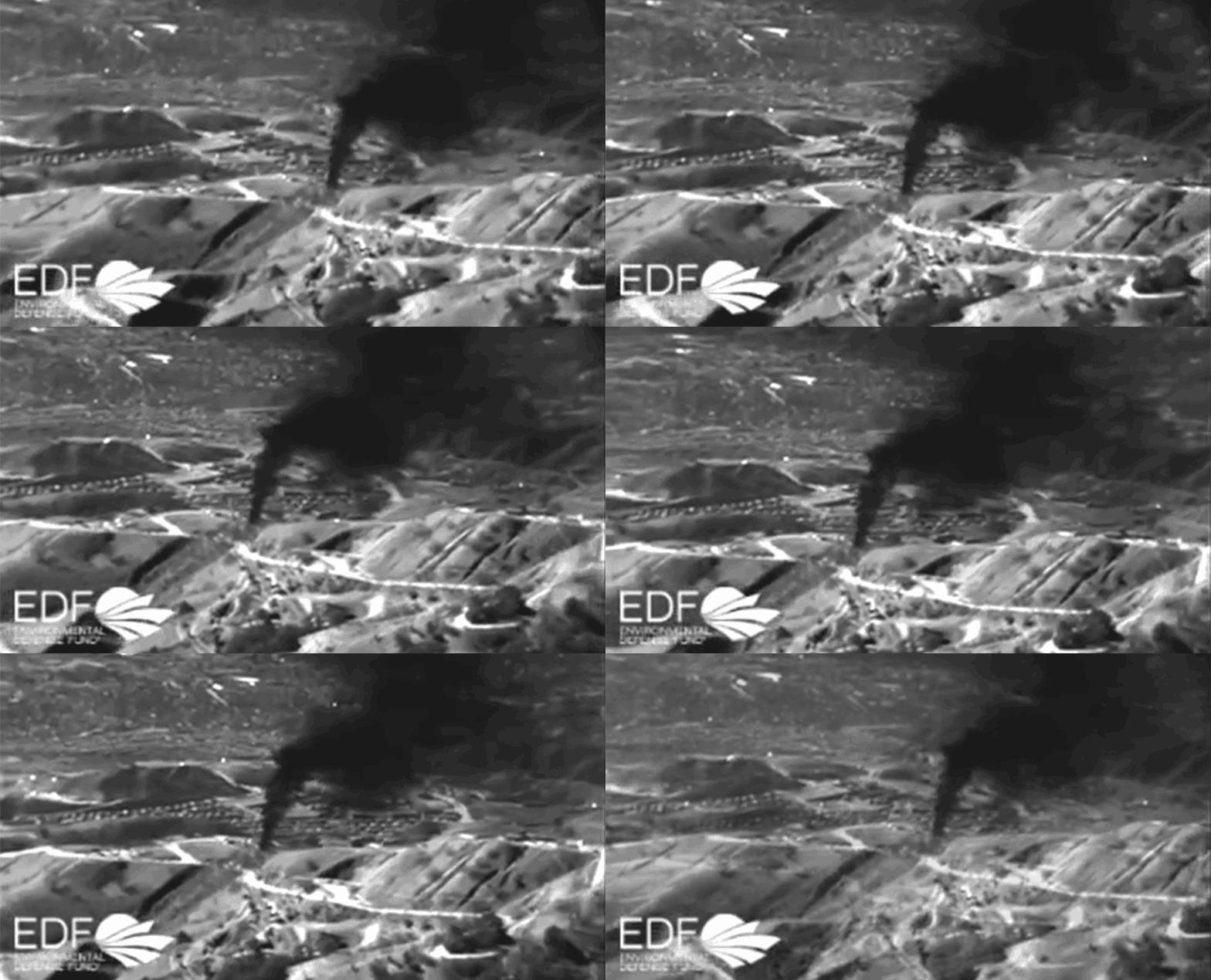
On October 23rd, a natural gas leak erupted at a storage well beneath the community of Porter Ranch. The well stores gas carried by pipelines from extraction operations hundreds of miles away in Texas, the Midwest, and the Rocky Mountains.
The leak has taken a serious toll on Porter Ranch residents, who for weeks have reported headaches, nausea, dizziness, and other symptoms. Methane is odorless and non-toxic, but natural gas producers inject it with trace quantities of sulfurous chemicals called mercaptans so that leaks can be detected by scent. According to Cyrus Rangan, director of the Toxics Epidemiology Program at LA County’s Department of Public Health, the stench from the leak is so foul that residents are having a physiologic response to it.
“People are having very real responses, based on their own sensitivity,” Rangan told Gizmodo. “In terms of acute chemical exposures, this is a really, really big deal.” Rangan estimates that somewhere between four and five thousand families have filed for help, with 2,200 families temporarily relocated so far.
As of this week, the leak has sent over 73,000 metric tons of methane gas skyward, according to estimates published by the Environmental Defense Fund, which is providing real-time updates on the situation. And that’s a big problem for our climate. Although short-lived in the atmosphere, methane is a potent greenhouse gas, with up to 80 times the global warming potential of CO2 in the first twenty years of its lifespan. 73,000 metric tons of methane is the global warming equivalent of over six million metric tons of CO2. Put another way, the daily emissions from Porter Ranch are essentially equivalent to sticking seven million additional cars on the road.
Plugging the Hole and Fixing the Problem
The first order of business for California is getting this well plugged. After several failed attempts to stop the flow of gas using conventional methods, SoCalGas began drilling a secondary “relief well” on December 4th. This well will intersect the leaky one and plug it. “After we intercept the well at more than 8,500 feet of measured depth, we will pump heavy fluids and drilling mud into the bottom of the leaking well to stop the flow of gas up from its source, the reservoir,” a statement provided to Gizmodo by SoCalGas, which manages the well, reads. “Once the flow of gas has been stopped, we will pump cement into the well to permanently seal the leak.”
Here’s what the entire operation will look like:

Image via SoCalGas
At last check-in, the drilling operation had reached a depth of 3,850 feet, and—in an important milestone—workers have now identified the seven-inch wide leaky gas pipe using magnetic ranging technology.
Still, SoCalGas warns that plugging the leak and stopping the flow of methane could take until the end of March.
Estimates from California’s Air and Resources Board show that total statewide methane emissions rose 25% this fall, dramatically diminishing any climate benefit natural gas industry offers. “SoCalGas recognizes the impact this incident is having on the environment,” SoCalGas spokesperson Anne Silva told Gizmodo in an email. “While working to stop the gas leak and alleviate its impact on the community, we also have been evaluating options to mitigate the environmental impact.”
But whatever mitigation measures SoCalGas takes, the leak highlights the shortcomings of natural gas—and how it’s regulated.
Nobody’s sure exactly how the Porter Ranch leak started, but a report by the EDF paints a disturbing picture of the state of natural gas pipes around Los Angeles. Nearly 40 percent of the pipes in SoCalGas’ jurisdiction are over 50 years old, and they’re leaking everywhere. The EDF reports an average of one methane leak every four to five miles across Pasadena, Inglewood, and Chino, three geographically disparate neighborhoods. These leaks vary from less than 1,000 to over 60,000 liters of natural gas per day. That means tens of thousands more cars worth of carbon emissions thanks to crappy infrastructure.
But this isn’t just an LA problem. Another report by the EDF estimated over 65 billion cubic feet, or approximately 1.3 million metric tones of natural gas leakage on federal and tribal lands in 2013 alone. “Globally, we know that more methane is leaked into the air from oil and gas infrastructure than the entire gas production of Norway—which is one of the world’s leading gas producers,” O’Connor said. “Methane is a significant problem, and in the US, it can erode the climate benefit of the gas industry.”
Nationwide, O’Connor estimates there are approximately 400 underground methane storage areas subject to little to no federal regulation—other Porter Ranch disasters waiting to happen. “These facilities are exempt from federal requirements for underground injections, and they fly under the radar until catastrophes strike,” he said.
And that’s not to mention leaks during drilling, transportation through pipelines, and distribution. If we’re going to see a net climate benefit from natural gas production over fossil fuels, experts say no more than 3 percent of gas can leak during the entire production process. In some parts of the country, we’re well beyond that figure. In other areas, the amount of leakage simply isn’t known.
For the first time this year, the EPA has introduced national standards that would directly regulate methane emissions from oil and gas facilities built in the future. But as the EDF points out, these rules say nothing about facilities already in operation. If the natural gas industry wants to sell an environmentally-friendly alternative to oil, all of its infrastructure needs to be air-tight.
“We need to think of natural gas as a bridge fuel, “ O’Connor said. “It’s an energy source that can have a benefit, but that benefit is only realized if you keep it in the pipes.”
...Read more
Below is a list of upcoming nature trips by local birding/conservation groups for the weekend of Saturday, January 9, 2016 to Sunday, January 10, 2016:
Brooklyn Bird Club
Saturday, January 9, 2016
Pelham Bay Park, Bronx
Leader: Jack Rothman
Focus: Woods birding, winter species, raptors, coastal birding for ducks and other waterfowl
Car Fee: $20.00
Registrar: Janet Schumacher janets33@optonline.net or 718-594-7480
Registration Period: January 2nd - January 7th
**********
Eastern Long Island Audubon Society
Saturday, January 9, 2016 at 8:00am
Lakes Around Patchogue
Trip Leader: John McNeil
Join John for a half-day excursion to what he calls “God’s little oases for wintering waterfowl.” Hopefully there will be a surprise or two to peak your interest! Meet at Swan Lake Preserve on Montauk Highway in East Patchogue. Contact John at 631.281.2623 for details. On the day of the trip, John’s cell is 631.219.8947
**********
Gateway National Parks
Sunday, January 10, 2016
How birds Survive Winter
Location: Jamaica Bay Wildlife Refuge | Map
Time: 1:00 PM to 2:00 PM
Fee Information: Free
Contact Phone Number: 718-987-6790
Cold weather got you down? Imagine you are a bird overwintering outdoors in Jamaica Bay! Food is scarce, the winds are harsh and there is definitely no hot cocoa to warm you up. Come to the Jamaica Bay Wildlife Refuge for a presentation and a brief walk as we explore winter survival in the animal kingdom!
**********
Great South Bay Audubon Society
Saturday January 9, 2016, 9:00am
Montauk
Leaders: Bob Grover (516-318-8536), Ken Thompson (631-612-8028)
Meet at Lighthouse parking lot. Latecomers can still join in the vicinity of the restaurant overlook. Directions Route 27 to 27A to end.
**********
Hudson River Audubon Society
Saturday, January 9, 2016
Short-eared Owls of the Shawangunk Grasslands NWR
Meet us at Lenoir 2:30 PM for car pooling and directions or meet us at the refuge at 4:00 PM. Up to a dozen Short-eared Owls winter at this former airport. As dusk settles on the refuge the owls come out at start to roam the refuge for prey. Sunset is at 4:30 PM. Before dusk we’ll look for other wintering birds such as Northern Harrier (Marsh Hawk) and maybe even a Rough-legged Hawk. Dress warm. We will be returning after dark.
http://www.hras.org/wtobird/shawangunk.html
**********
Linnaean Society of New York
Saturday January 9, 2016
Jones Beach and Point Lookout
Leader: Richard ZainEldeen
Registrar: Ellen Hoffman — ellenh33@icloud.com or 917-903-3486
Registration opens: Monday December 28
Ride: $25
**********
Littoral Society
Friday, January 08, 2016
Montauk Winter Weekend
Join us for a weekend of seals, seabirds and hikes on the shorelines and woods of Montauk, Long Island, NY. Visit the Walking Dunes, historic Montauk lighthouse and bluffs, Camp Hero and Napeague forest. Hikes and nature walks will by led by American Littoral Society Northeast Chapter Director Don Riepe.
Price includes two nights at the luxurious Manor House, five meals, five guided hikes, two evening programs, and a star watch.
For more information or to make reservations call 718-474-0896 or email donriepe@gmail.com.
Contact : call 718-474-0896 or email donriepe@gmail.com
**********
New York Botanical Garden (Bronx)
Saturday, January 9, 2016
Debbie Becker leads a free bird walk at the Garden every Saturday from 11 a.m. to 12:30 p.m. beginning at the Reflecting Pool in the Leon Levy Visitor Center
**********
New York City Audubon Society
Friday, January 8, 12am – Mon, January 11, 12am
Montauk Winter Weekend
Guides: Mike Bottini, Mickey Cohen, Don Riepe with American Littoral Society
Spend a quiet weekend at Montauk during peak winter birding time. Visit the seal haul-out and see many species of of seabirds including loons, scoters, and goldeneye. Accommodations at the luxurious Manor House. For reservations, contact Don Riepe at 718-474-0896 or donriepe@gmail.com. $395
Saturday, January 9, 2016, 9am – 6pm
Winter Birding on the South Shore of Long Island: Jones Beach and Shinnecock Inlet
Guide: Gabriel Willow
Winter in NY brings the excitement of possibility: Will snowy owls appear in the dunes? Will harlequin ducks move westward from Cape Cod & Montauk, and appear in closer waters? Will irruptive northern finches and bohemian waxwings move south from Canada? All of these species and more are possible on Long Island in the winter, along with more expected species such as loons, grebes, scaup, eider, northern harriers, purple sandpiper, and more. Winter affords a unique and diverse set of species, so bundle up and brave the cold for some of the best birding our area has to offer! We will explore the dunes, pines, and coastal waterways of Jones Beach, Dune Road, and Shinnecock Inlet. Van transportation included.
Limited to 12. $93 (65)
Click here to register
Sunday, January 10, 2016, 9:30am – 11:30am
Winter Birding Along the Hudson: Wave Hill
Guide: Gabriel Willow with Wave Hill
Meet at the Perkins Visitor Center. The Hudson River valley hosts an impressive diversity of bird species, even during the winter months. Come explore the beautiful gardens and woodlands of Wave Hill and observe the hardy birds that spend the winter in this urban oasis. Advanced registration is recommended, either online, at the Perkins Visitor Center, or by calling 718-549-3200 x251. Walks run rain or shine; in case of severe weather call the number above for updates. Ages 10 and up welcome with an adult. NYC Audubon members enjoy two-for-one admission
Sunday, January 10, 2016, 10am – 5pm
Birding Gems of Staten Island: Winter at Freshkills Park
Guides: Cliff Hagen and Tod Winston
With NYC Department of Parks and Recreation
Meet at the Manhatttan terminal of the Staten Island Ferry. Winter at Freshkills Park is an exciting time for birding! The grass-covered slopes offer birds plenty of seed and shelter to manage the difficult cold. A number of sparrows including song, savannah, white-throated and white-crowned enjoy Freshkills throughout the winter, and on the flatter, wind-swept areas of the mounds, flocks of horned lark and snow bunting huddle close and stay low as they feed among barrens areas. Down below the mounds are a crisscross of tidal creeks filled with a variety of waterfowl. Grebes, geese and coots swim alongside over a dozen species of ducks. Of particular interest are the teal, mergansers and pintails which frequent Freshkills each winter. Transport by passenger van on S.I. included. Limited to 12. $68 (47)
Click here to register
Sunday, January 10, 2016, 12pm – 2pm
Winter Seals and Waterbirds of NY Harbor
Guide: NYC Audubon guide
Meet at South Street Seaport’s Pier 17 and come aboard NY Water Taxi’s eco-friendly vessel for a winter adventure in New York Harbor! Look for harbor seals on the rocky shores of Governor’s Island and the more remote Hoffman and Swinburne Islands. Learn about the surprisingly diverse winter birds of New York City, including ducks, geese, loons, and sandpipers, many of which migrate south from the Arctic. See the Statue of Liberty and pass under the Verrazano Bridge. Dress warmly! Limited to 90. To register, contact New York Water Taxi at 212-742-1969 or www.nywatertaxi.com. $35 for adults; $25 for children under 12; $105 for family pack for 2 adults and 2 children
**********
Protectors of Pine Oak Woods
Saturday, January 9, 2016, 1:00pm – 3:00pm
Buck’s Hollow and/or Heyerdahl Hill
Cost: Free
Contact: John Paul Learn 718-619-5051
Located in the Greenbelt, Heyerdahl Hill is nestled in an impressive stretch of woodland, holding ruins of a stone home built in the 1800s and plants and trees rarely seen in urban woodlands. We will meet at the stone wall on Meisner Ave, located by the intersection of Rockland Avenue and Meisner Avenue (http://goo.gl/maps/YP1HI).
Sunday, January 10, 2016, 1:00pm – 3:00pm
Acme Pond
Cost: Free
Contact: John Paul Learn 718-619-5051
Acme Pond is a diverse ecosystem, located on the north side of Hylan Boulevard across from Wolfe’s Pond Park. This walk takes us through hiking trails in some of the most idyllic woodlands in all of NYC. The trail offers views of the freshwater pond and assortment of small swampy areas. Meet at the corner of Seguine Avenue and Herbert Street. Street parking is available on Herbert Street and in parking lots at the end of Herbert Street (http://goo.gl/maps/59dvC).
**********
Queens County Bird Club
Saturday, January 9, 2016, 7:30am – 12:00pm
Point Lookout
Leader: Arie Gilbert 917-693-7178
CONTACT LEADER to confirm meeting time/location
**********
South Shore Audubon Society
Sunday, January 10, 2016
Pelham Bay Park
All walks start at 9:00 A.M.
There is no walk if it rains or snows or temperature is below 25°F.
For more information or in case of questionable weather conditions, please phone Joe at 516 467-9498.
For directions to our bird-watching locations, click here.
**********
Urban Park Rangers
Saturday, January 9, 2016
Birding: Eagles at Payson Center (in Inwood Hill Park), Manhattan
9:00 a.m.–10:30 a.m.
New York City is home to an amazing abundance of wildlife. Our Rangers will guide you to the best eagle-viewing spots at Inwood Hill Park. All skill levels welcome.
Free!
Sunday, January 10, 2016
Winter Birding at Perkins Visitors Center (in Wave Hill), Bronx
9:30 a.m.–10:30 a.m.
The Hudson River valley hosts an impressive diversity of bird species, even during the winter months. Explore Wave Hill’s tranquil gardens and woodlands with naturalist Gabriel…
...Read more


 Posts
All Comments
Posts
All Comments


Creative Commons Attribution-Noncommercial-No Derivative Works 3.0 License


